


.avif)





.svg)



Should Supabase (Low-Code) be used in 2025?

.svg)
Supabase has established itself today as a must-have solution in the low-code ecosystem for web developers and agencies. By offering a complete integrated suite of PostgreSQL database, API, authentication, and storage, Supabase facilitates the development of modern applications without sacrificing power or flexibility. Thanks to its instant APIs and clear interface, it considerably speeds up the implementation of backends, a welcome advance in an often complex and time-consuming field.
But does Supabase really meet all the needs of professional developers? Can it compete with more traditional or specialized solutions? In this article, we'll take a detailed look at its strengths and limitations, as well as the use cases where it brings real added value. An expert view to guide you in your choice in 2025.
My experience with Supabase (Low-Code)
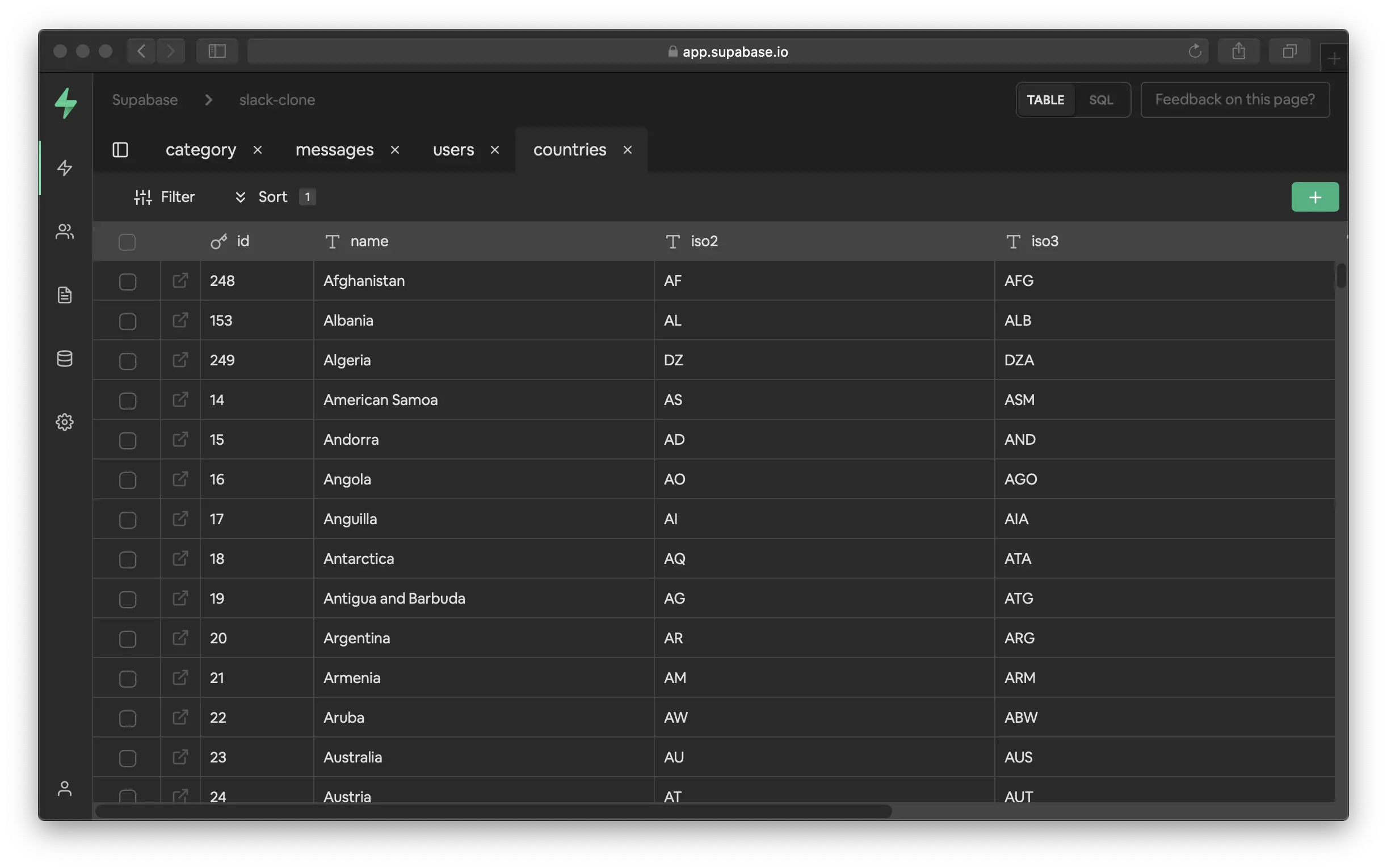
I used Supabase mainly in a professional setting to rapidly prototype web applications with a complete backend in a matter of hours. Its accessible configuration and auto-generated APIs saved me precious time, while retaining technical power thanks to the underlying PostgreSQL. It's a real gas pedal for developing without starting from scratch.
What impressed me most was its ability to manage authentication, database and file storage in a single platform, ideal for SaaS applications or administration panels. In particular, it excels in scenarios requiring a rapidly scalable and integrated backend.
Among its limitations are a dependence on Supabase's cloud architecture, some less advanced features compared to conventional backend frameworks, as well as costs that can escalate rapidly for data-intensive projects.
Is Supabase (Low-Code) really useful for my needs?
The real question to ask yourself before adopting Supabase is to clearly define the nature and scope of your backend needs. Supabase is cut out to quickly provide a complete backend infrastructure, without the need to build or manage servers manually.
For freelance developers and small agencies looking to prototype or deploy SaaS apps, dashboards, or mobile apps, Supabase offers a complete, out-of-the-box environment. Startups looking for agility will also find it of major interest. For more experienced teams who want fine-grained control over the backend, Supabase can serve as a base while allowing customizations via SQL and API.
Finally, another key advantage is its active community and easy integration with other low-code and no-code tools, facilitating extensions specific to your own needs.
.
Is Supabase (Low-Code) suitable for beginners?
Supabase offers a simple, intuitive interface with many out-of-the-box features, making it relatively accessible for novice developers wishing to explore the backend without diving into the complexity of server code. Authentication wizards, clear documentation and automatic APIs make it easy to get to grips with.
For a beginner, this represents a major practical advantage: no need to manage servers, or write cumbersome backend functions. The graphical interface and SDKs on offer simplify data management, authentication and storage, making progressive learning more enjoyable and quicker.
How much does Supabase (Low-Code) cost?
Supabase offers a comprehensive free package ideal for testing and starting projects. This package includes a PostgreSQL database, authentication, storage and API in limited quantities, suitable for small projects and prototypes.
For scalable business needs, Supabase offers packages starting at $25 per month offering more storage capacity, increased bandwidth, and advanced features such as automatic backups, SLA support and monitoring. These plans are targeted at small and medium-sized businesses and development teams who demand reliability and performance.
Finally, for more extensive usage, particularly in enterprise or high-load projects, tailor-made offers exist with pricing adapted to the volumes and features required, enabling controlled scalability.
What are the key features of Supabase (Low-Code)?
Supabase's major key feature is undoubtedly its fully-managed PostgreSQL database with automated RESTful and real-time APIs. This enables developers to easily interact with the database via simple, efficient queries, taking advantage of the powerful SQL ecosystem.
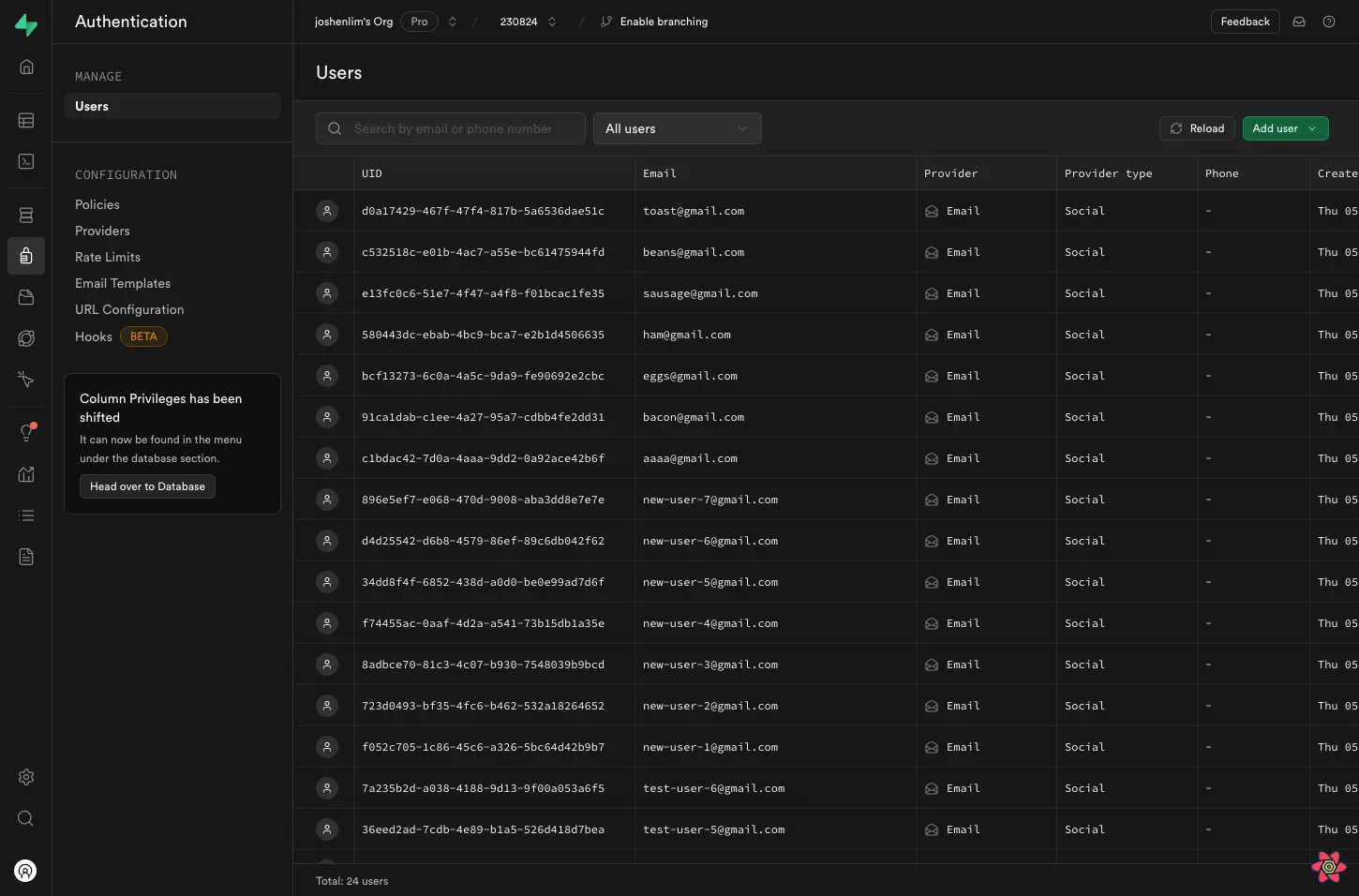
Another highly appreciated feature is integrated authentication. This supports email and social network authentication, as well as complete user session management. This centralized solution simplifies application security without adding complexity.
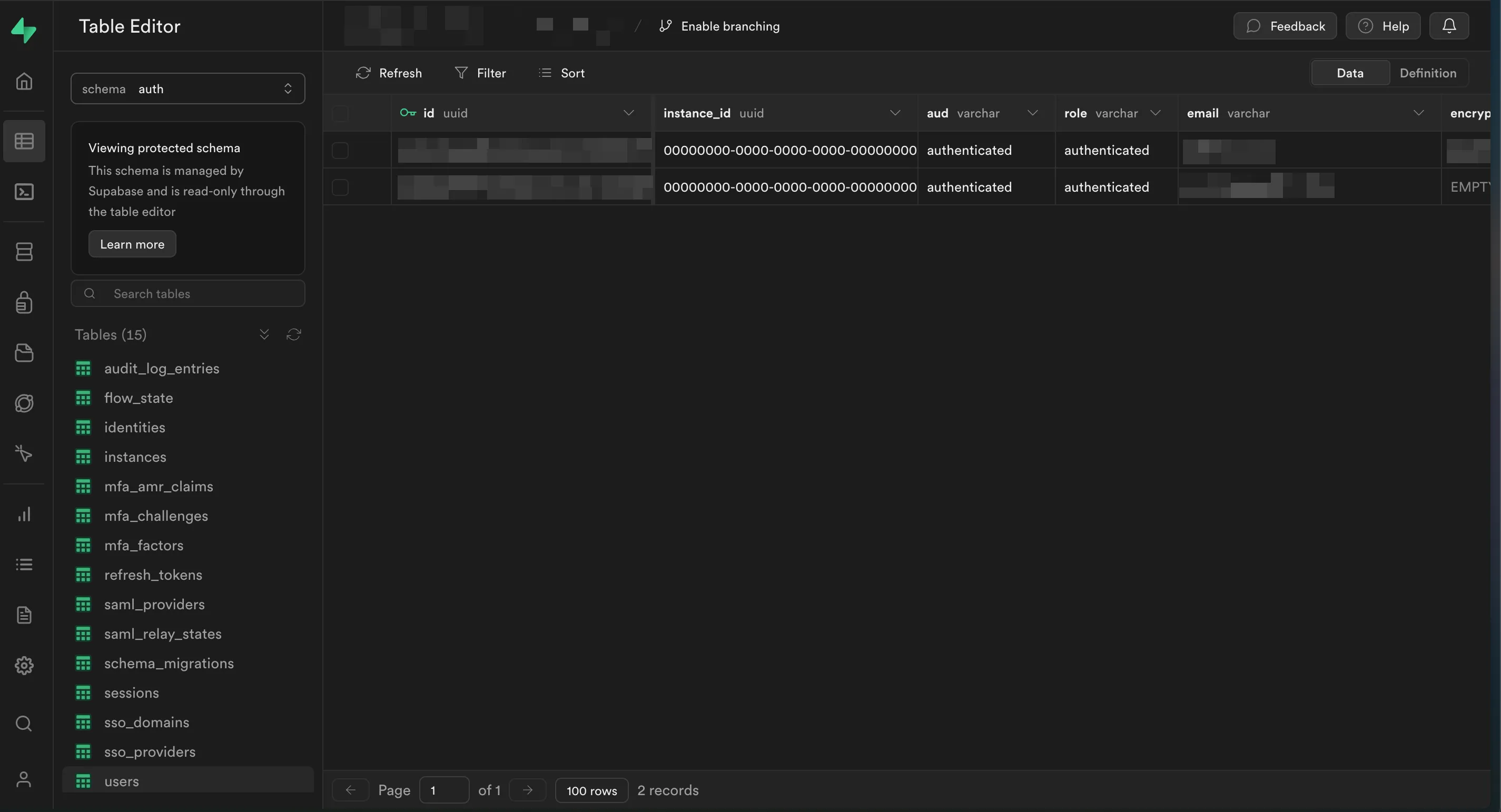
Among its advanced features, Supabase offers hosted file storage, ideal for managing media or documents without recourse to a third-party service. This integration is straightforward and optimized for the developer experience.
In addition, Supabase offers a system of edge functions that enable customized code to be executed close to the user for faster responses and remote business logic, offering increased flexibility to applications.
Supabase is not suitable for every profile or every use case. For extremely complex applications or those requiring extensive backend customization, its low-code features can prove restrictive. In addition, its dependence on the Supabase cloud sometimes limits architectural flexibility, particularly for on-premise or multi-cloud deployments.
Competitors such as Firebase, Hasura or Appwrite sometimes bring alternative approaches with different integrations or performance, depending on the case. These solutions sometimes offer advantages in terms of realtime, extensions or more advanced data control.
In summary, Supabase combines simplicity of use and relative power, but remains less suitable for projects requiring highly specific, bespoke backend architecture. Evaluating the advantages vs. disadvantages is essential for an informed choice.
FAQS
Is it reliable and secure?
Supabase relies on a secure infrastructure based on industry standards: PostgreSQL databases secured by encrypted connections (SSL/TLS), OAuth authentication, and fine-grained authorization management at table level. The access control system enables data to be secured according to profile.
The platform is regularly updated, guaranteeing robustness and the correction of vulnerabilities. Supabase also provides automatic backups and tools for disaster recovery, ensuring high reliability for mission-critical applications.
Is it compatible with my other tools?
Supabase is compatible with numerous frameworks and programming languages via its RESTful APIs and official SDK clients (JavaScript, Python, Dart, etc.). It also supports integrations with third-party tools via webhooks and APIs, enabling a rich ecosystem.
Standard SQL and Postgres formats ensure interoperability with data analysis, migration and management tools. This openness facilitates collaboration and multi-technology deployments.
Is there responsive customer support?
Supabase customer support offers assistance via comprehensive documentation, active community forums, and official channels such as Slack. For paid packages, priority support is available with short response times and personalized follow-up.
This organization guarantees assistance tailored to beginners and professional developers alike, favoring rapid problem resolution and guidance in complex integrations.
What do other users think?
User reviews generally praise Supabase's ease of use, development speed and functional richness. Many appreciate the combination of PostgreSQL database and real-time API, which is rare in low-code platforms.
However, some point to limitations in advanced customization and scalability beyond certain thresholds. Some feedback also mentions costs that can escalate for intensive use, making Supabase an optimal choice especially for small to medium-sized projects.
Can I easily change later?
User reviews generally praise Supabase's ease of use, development speed and functional richness. Many appreciate the combination of PostgreSQL database and real-time API, which is rare in low-code platforms.
However, some point to limitations in advanced customization and scalability beyond certain thresholds. Some feedback also mentions costs that can escalate for intensive use, making Supabase an optimal choice especially for small to medium-sized projects.
Alternatives

Specializing in business creation, sales and digital marketing, he puts his expertise at the service of users to help them identify the solutions best suited to their needs. Passionate about digital innovation and optimizing online performance, Alexis is committed to providing detailed, transparent and unbiased comparisons.
Do you have an entrepreneurial project?
We support you in the structuring and development of your tech project. Make an appointment with one of our Business Strategists.