


.avif)





.svg)



Should Mendix be used in 2025?
Mendix is positioned today as one of the most advanced low-code platforms on the market, facilitating the rapid development of professional and enterprise applications. This type of tool shakes up the traditional way of coding by offering a visual interface and pre-built components that enable complex applications to be designed, deployed and managed with considerably reduced development time.
But how can a low-code platform like Mendix really transform the way web developers and agencies approach their projects? In this article, we'll review the benefits, limitations and specific use cases to help you determine whether Mendix is relevant to your needs in 2025.
My experience with Mendix
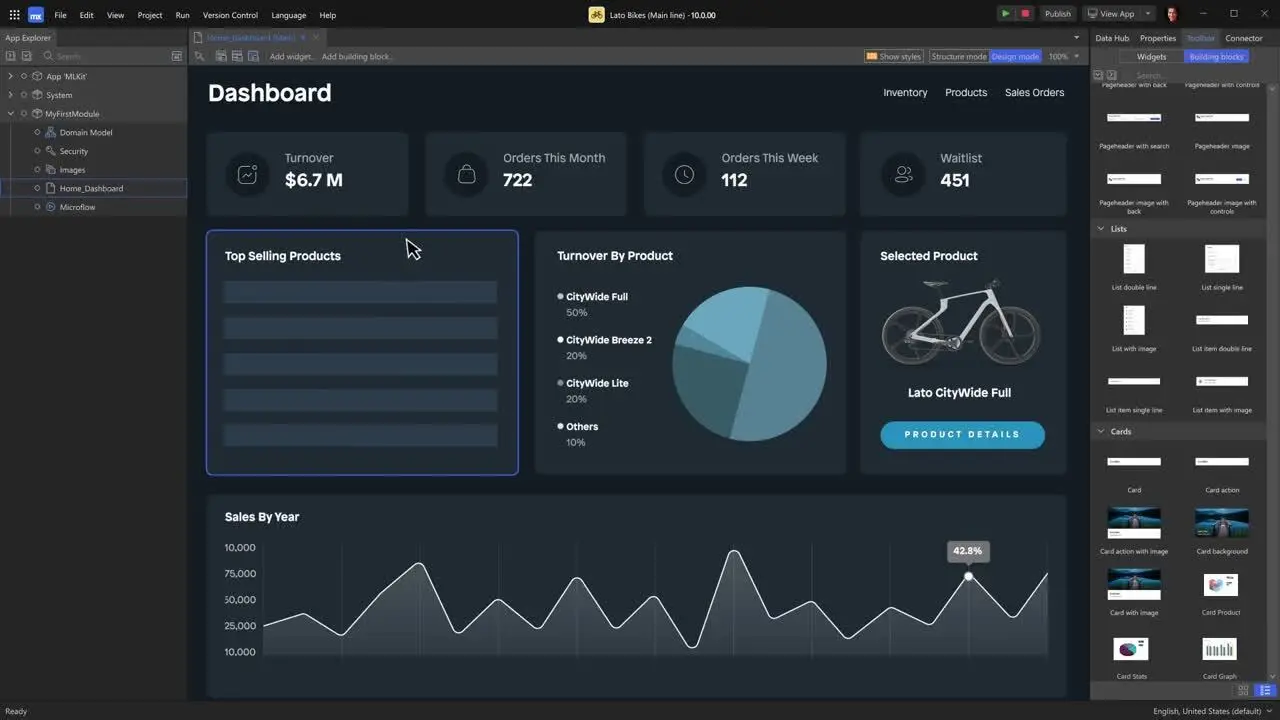
I've used Mendix mainly in a professional context to accelerate the delivery of internal business applications. What struck me right from the start was the speed of prototyping thanks to the intuitive drag-and-drop interface and the multiple connectors to common services. The highlight is undeniably the rapid iteration offered by the platform, enabling business logic to be quickly adjusted without touching traditional source code.
Mendix excels particularly well when it comes to creating applications with complex workflows or multiple integrations. For example, during a customer project requiring fine-grained management of data from several disparate systems, the platform enabled me to compose robust business processes while maintaining a clear architecture.
However, its limitations appear for ultra-specific needs or very advanced performance optimizations. Some advanced customizations require mastery of the underlying languages (Java in particular) and can make the project more complex. That said, for the majority of standard business applications, it's an excellent compromise between speed and power.
.Is Mendix really useful for my needs?
The real question to ask when considering adopting Mendix is the complexity and repetitiveness of the projects to be developed. If you're regularly called upon to design complex business applications, requiring multiple integrations and advanced interactivity, Mendix can save you precious time.
Among the personas that will benefit most from Mendix are enterprise application developers who need to quickly deliver functional prototypes, internal IT teams looking to automate processes without cumbersome management, as well as web agencies looking to offer rapid solutions to their customers without sacrificing quality and maintenance.
Another strength of Mendix lies in its ability to foster collaboration between professional developers, business analysts and end users thanks to its low-code approach centered on visual modeling.

Is Mendix suitable for beginners?
Mendix can be accessed by beginners thanks to its intuitive visual interface and predefined components that make it easy to get started. This means that novices can quickly start creating simple applications without mastering complex languages.
From a practical point of view, the platform offers numerous tutorials, comprehensive documentation and an active community that will support beginners as they learn, while enabling them to move on to more complex projects as their skills increase.
How much does Mendix cost?
Starter package: from €750 per month, this package targets small businesses and teams wishing to get started quickly with a low-code environment. It includes basic functionality, limited user and application capacity, and standard support.
Formula Pro: for around €1,500 per month, this package is suited to medium-sized companies or agencies requiring advanced features such as API integration, finer-grained user management and priority support.
Enterprise package: on quotation, this customized solution is aimed at large organizations with complex needs, a high volume of users and strong requirements in terms of security, deployment and SLA.
What are Mendix's key features?
Mendix's first key feature is certainly its low-code visual development environment, which enables the rapid creation of business applications by assembling functional blocks, automating processes and visual modeling. This approach drastically reduces development times by simplifying design and fostering collaboration between technical and business teams.
Another important feature is integrated data and integration management. Mendix offers a wide range of connectors to databases, third-party APIs and cloud services, facilitating the creation of connected, scalable applications with seamless synchronization of information.
The key to success is the integrated management of data and integrations.
Advanced features include the ability to develop custom business logic via Java or JavaScript code, providing additional flexibility when use cases exceed standard low-code capabilities.
Then Mendix offers multi-environment deployment tools, performance monitoring, as well as advanced security options including authentication, role management and data encryption to ensure robust, standards-compliant applications.
.Like any low-code solution, Mendix has its limits, particularly when it comes to projects requiring very fine-grained customization, extensive performance optimization or the development of highly user-oriented applications with very specific native interactions. In these cases, a classic framework or custom code may be more suitable.
However, Mendix remains competitive against tools such as OutSystems or Microsoft PowerApps, which present similar approaches to rapid application development. If you're looking for an alternative, these platforms could also meet your expectations depending on your specific constraints.
In summary, Mendix offers an excellent balance between ease-of-use and power, with clear advantages in terms of development speed, but you'll sometimes have to accept compromises on advanced customization or total flexibility compared to native code.
FAQS
Is it reliable and secure?
Mendix is a platform renowned for its robustness and application security. It relies on standardized protocols such as HTTPS, OAuth 2.0, and best practices in application and infrastructure security. Data transits encrypted, and only authorized persons have access to applications thanks to fine-grained role and permissions management.
Furthermore, the platform follows strict compliance standards, including GDPR, and offers flexible hosting options, including dedicated private environments for added control. All in all, Mendix is reliable for business-critical applications.
Is it compatible with my other tools?
Mendix is compatible with numerous systems and formats. It offers native integrations with various databases (SQL, NoSQL), RESTful APIs, and popular cloud services such as Azure, AWS or Google Cloud. The platform also offers a robust API for extending its functionalities or connecting third-party services.
This broad compatibility facilitates integration into existing infrastructures and ecosystem working with other business tools.
Is there responsive customer support?
Mendix customer support is rated highly overall for its responsiveness and professionalism. It includes support via ticket, online chat, and a comprehensive resource center. Pro and Enterprise customers benefit from priority support, with response times often within 24 hours.
In addition, the active user community also provides rapid advice and solutions, rounding out the support offered by Mendix.
What do other users think?
User reviews of Mendix very often highlight ease of learning and speed of development as major strengths. Modularity and the ability to handle complex business cases are also appreciated.
However, some feedback mentions a longer learning curve for advanced functionalities and a sometimes high cost for small structures.
Can I easily change later?
User reviews of Mendix very often highlight ease of learning and speed of development as major strengths. Modularity and the ability to handle complex business cases are also appreciated.
However, some feedback mentions a longer learning curve for advanced functionalities and a sometimes high cost for small structures.
Alternatives
.svg)

Specializing in business creation, sales and digital marketing, he puts his expertise at the service of users to help them identify the solutions best suited to their needs. Passionate about digital innovation and optimizing online performance, Alexis is committed to providing detailed, transparent and unbiased comparisons.
Do you have an entrepreneurial project?
We support you in the structuring and development of your tech project. Make an appointment with one of our Business Strategists.