


.avif)





.svg)
.svg)




Typewolf has become THE reference for finding font pairs that stand out from the crowd and stay on top of typographic trends. It's the essential tool when you want to give character to a design without spending hours searching for the perfect match. But in 2025, faced with the explosion of generative AI and ultra-sophisticated design tools, does Typewolf still have a place in our toolbox? Is this resource, as iconic as it is, still relevant to our current web creations? Simplicity, depth of suggestions, limitations to consider... Since I founded Easy Web in 2020, I've seen a lot of tools evolve. Today, I'm sharing my feedback and objective opinion on whether Typewolf is really useful for your professional needs.
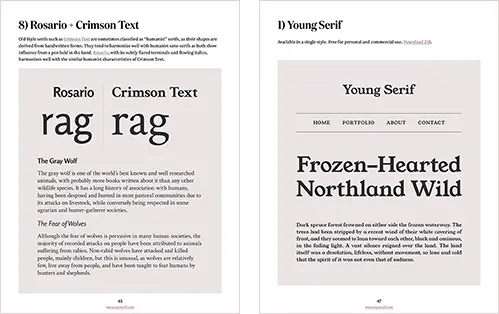
My Typewolf experience
It's been several years now that Typewolf has been permanently open in one of my tabs, for Easy Web projects as well as my own experiments. It's my go-to reference for typography. What I look for there above all is highly relevant, cutting-edge typographic inspiration.
For designers and agencies who want to be on the cutting edge of trends, or simply find the perfect font for a new site, Typewolf is an invaluable ally. It shows you how typefaces are really used on live projects, with validated font associations. Ideal for unlocking an idea or validating a creative choice.
But beware, Typewolf is not a font management tool, nor a text editor. It doesn't provide files or replace testing in your design environment. It's a platform for pure inspiration, an art gallery dedicated to type.
Is Typewolf really useful for my needs?
The real question before Typewolf is: what is your purpose? Its relevance depends very much on usage. If you're looking for pure typographic inspiration, bold font combinations or current trends, Typewolf is your absolute reference. For this precise purpose, it's frighteningly effective.
Whether you're a freelance designer, agency or art director, Typewolf saves you precious time. For a new branding project, it helps you unearth unique and impactful typeface associations. For a website redesign, you explore modern typefaces used in real-life contexts, giving you concrete leads.
Another major asset is its ability to show the concrete application of fonts. You don't just see a typography in isolation, but how it blends with others, on real sites. It's a source of continuous visual learning, a real decipherer of the best typographic practices of the moment.


Is Typewolf suitable for beginners?
For the designer just starting out, or even the entrepreneur launching his first project, choosing the right typography is often a real challenge. Typewolf shines here: it demystifies typography thanks to its teeming gallery. No more hours searching for fonts that match! You'll discover "showcases" of real sites with the fonts used, and it's incredibly instructive. You can filter by style, by mood, and directly see font pairings that work, tested and approved. It's like having a typography mentor just a click away.
This visual, hands-on approach is a major plus for juniors. Instead of getting lost in complex theories, Typewolf offers direct access to successful use cases. This allows you to understand intuitively what makes a font effective in a given context. It's a huge time-saver and an invaluable source of inspiration for quickly building a solid typographic eye, without the classic mistakes of the early days.
How much does Typewolf cost?
The Accès Essentiel is, you guessed it, free. It offers basic consultation of flagship articles and typographic previews. It's ideal for students or novices exploring typography and wanting a no-obligation first contact.
For the more experienced designer, the Pro package, at €15 per month (or €150 per year), unlocks full access to detailed analysis, exclusive collections and advanced comparison tools. I see it as perfect for freelancers and small agencies looking to refine their typographic choices.
Finally, the Studio package, priced at €49 per month (or €490 per year). It includes all Pro features, adding multi-user licenses and customized reports for your customers. Indispensable for established web agencies or large design teams, it ensures smooth collaboration and professional consistency across all projects.
What are Typewolf's key features?
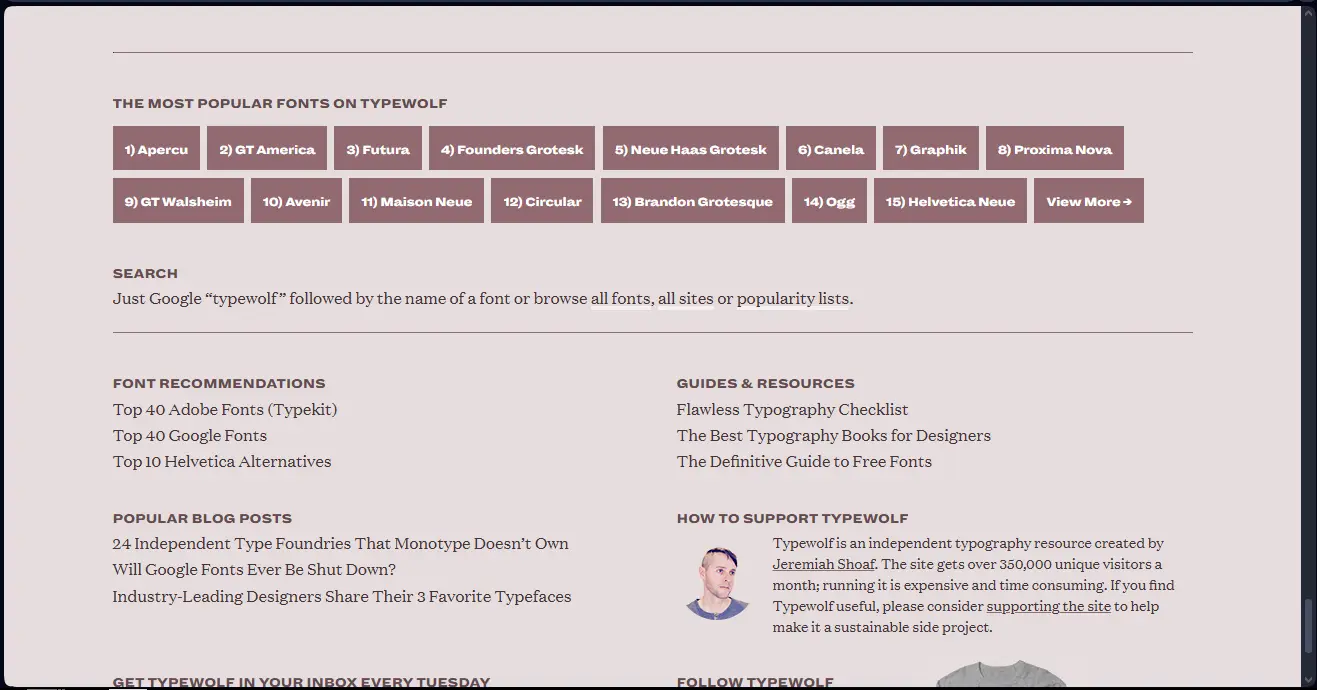
Typewolf, for me, is first and foremost a gold mine for typographic associations. No more hours searching for the perfect font! The tool offers refined pairings, often with an analysis of their visual impact. We've really gained in efficiency at Easy Web: no need to worry about combinations that don't match, the inspiration is there, ready to be adapted to our projects. It's a real creative boost.
But what really makes the difference is the presentation of these fonts in real-life situations. Seeing a typeface applied to a website in production, with the CSS code behind it, is a must. It allows you to understand the technical integration and final aesthetic, far beyond a simple preview. It's what validates our choices and ensures we remain relevant in 2025.
If you've ever spent hours searching for the perfect combo, you know that Typewolf doesn't just list fonts. What I love is their hyper-detailed analysis of actual usage. You don't just see a font, but how it breathes on a site in production. They break down pairings, sizes, line spacing... It's like having a master typographer show you concretely why a particular choice works. No more guesswork!
And that's not all. Their curation is a nugget. Forget drowning in thousands of fonts. Typewolf identifies emerging typographic trends, the "next big things" that define the web aesthetic of 2025. Their thematic collections are an invaluable source of inspiration. Need typography with character? A futuristic or classic look? You'll find complete sets, ready to explore, without wasting any time. A real gain for us designers.
Typewolf excels for inspiration, but don't be fooled. For testing font combinations live on your project, managing your library or buying licenses, it shows its limits. It's not an interactive prototyping or management tool, but rather a showcase of real-world examples.
For these needs, I turn to Google Fonts, Adobe Fonts, or managers like FontBase. Yet Typewolf remains indispensable for unearthing nuggets and understanding current typographic trends. It perfectly complements other tools without trying to be all things to all people.
In brief:
Advantages:
- Specialized, high-quality curation
- Real-life examples of font usage
- Typographic trends watch
Disadvantages:
- No live testing of combinations
- No integrated font manager
- No direct purchase of licenses
FAQS
Is it reliable and secure?
Absolutely. Typewolf's reliability stems from its meticulous curation; it's not a collaborative database, but the work of experts. Their recommendations are solid and tested. On the security side, like any reference web platform in 2025, Typewolf uses standard encryption protocols (HTTPS) to protect your browsing data. You can surf with complete peace of mind. I've never had any worries about the resources or links they share; it's a source of trust for Easy Web.
Is it compatible with my other tools?
Look, Typewolf doesn't integrate directly as a plugin with Figma, Sketch or Webflow. Its role is different, more fundamental. It's an exceptional typographic curation resource. What you get are concrete font pair inspirations, links to licenses (often Google Fonts, Adobe Fonts or commercial foundries), and ready-to-use CSS snippets. You can use this information in any design or development environment. Its compatibility is universal: it's a valuable guide, usable wherever you build your interface.
Is there responsive customer support?
Their support is very autonomy-oriented. I'm talking about a well-stocked FAQ and a contact form. In five years with Easy Web, we've only had a few occasions to call on them. Each time, the responsiveness was there, but don't expect 24/7 dedicated customer support. This is a niche tool, a valuable resource, not a complex SaaS requiring constant assistance. You'll mostly find your answers on your own, or via their exhaustive documentation. It's efficient for the type of tool.
What do other users think?
The feedback I'm seeing is almost unanimously positive. Designers love Typewolf for its ultra-sharp typographic curation. It's a goldmine for inspiration, but also for validating your typographic choices in real contexts. We see it as a reliable guide, essential for refining the visual identity of a project. The quality of the real-life examples is what makes it unanimously acclaimed and the real difference for the pros.
Can I easily change later?
The feedback I'm seeing is almost unanimously positive. Designers love Typewolf for its ultra-sharp typographic curation. It's a goldmine for inspiration, but also for validating your typographic choices in real contexts. We see it as a reliable guide, essential for refining the visual identity of a project. The quality of the real-life examples is what makes it unanimously acclaimed and the real difference for the pros.
Alternatives
.svg)

Specializing in business creation, sales and digital marketing, he puts his expertise at the service of users to help them identify the solutions best suited to their needs. Passionate about digital innovation and optimizing online performance, Alexis is committed to providing detailed, transparent and unbiased comparisons.
Do you have an entrepreneurial project?
We support you in the structuring and development of your tech project. Make an appointment with one of our Business Strategists.