


.avif)





.svg)



Should Make be used in 2025?

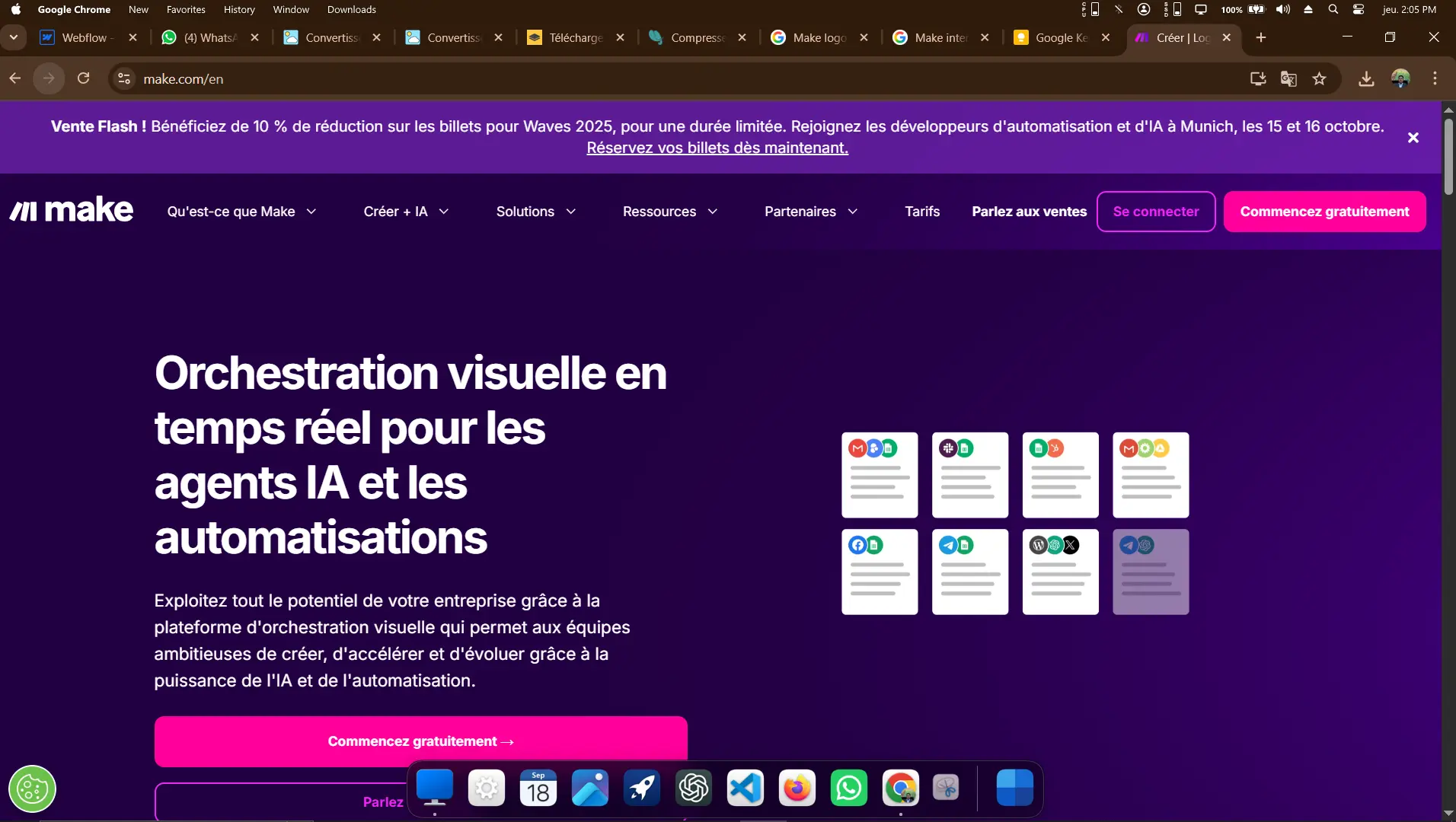
Make has established itself today as a key player in the field of automation, enabling web developers and agencies to design powerful workflows without coding from scratch. From the management of complex processes to easy integration between applications, Make makes life drastically easier for development professionals, thanks to its intuitive interface and virtually infinite possibilities.
But then, why choose Make over so many other automation solutions? This article offers a comprehensive tour of its features, as well as an analysis of its usefulness, relevance and limitations in a variety of professional contexts.
.
My experience with Make
I use Make regularly in a professional setting to automate flows between different business applications, particularly in project management and customer data synchronization. What I particularly appreciate is its **remarkable flexibility**, which allows you to create complex custom scenarios without requiring intensive coding.
Make excels above all when you need to orchestrate several non-natively compatible applications, or when conventional automations no longer suffice. Its ability to integrate a wide range of services via API makes it an invaluable ally in a diverse technological environment.
However, its interface can seem dense at first, which can make it complex for newcomers to get to grips with. What's more, some advanced functionalities require a certain learning curve, which can hold you back in a fast-paced environment.
The key to success lies in the fact that it's easy to learn.Is Make really useful for my needs?
The real question to ask before adopting Make is: how much automation complexity do I need to handle? For simple, repetitive tasks, Make may seem over-dimensioned. On the other hand, for projects requiring detailed workflows with multiple conditions, it's a wise choice.
Personas likely to benefit include: web agencies managing multiple integrations between CRM, marketing platforms, and internal systems; freelance developers automating tedious routines to focus on pure development; as well as project managers wishing to synchronize multiple business tools without developing a heavy infrastructure.
Finally, another of Make's strengths lies in its active community and wealth of ready-to-use templates, making it easy to get started quickly and considerably reducing the time it takes to set up automations.
.
Is Make suitable for beginners?
Make features an intuitive visual interface that makes it easy for those new to automation to get started. Features such as drag & drop, pre-built scenarios and step-by-step guides make discovery accessible.
For a beginner, the ability to explore simple automations without coding makes it easy to grasp the essential concepts. Nevertheless, moving on to more complex scenarios will require an investment of time to master all the options and API usage.
How much does Make cost?
Make offers several packages tailored to different uses.
The Free plan lets you test out the basics of automation with a limited quota of monthly operations, ideal for beginners looking to get started.
The Core plan at $9/month offers a higher number of operations, access to more applications and some advanced features, ideally suited to freelancers and small agencies.
The Pro plan at around $29/month opens the doors to more complex automations, better scenario management, and priority support, meeting the needs of medium-sized teams.
Finally, the customized Team and Enterprise plans are aimed at agencies and companies with high volume and security requirements.
What are Make's key features?
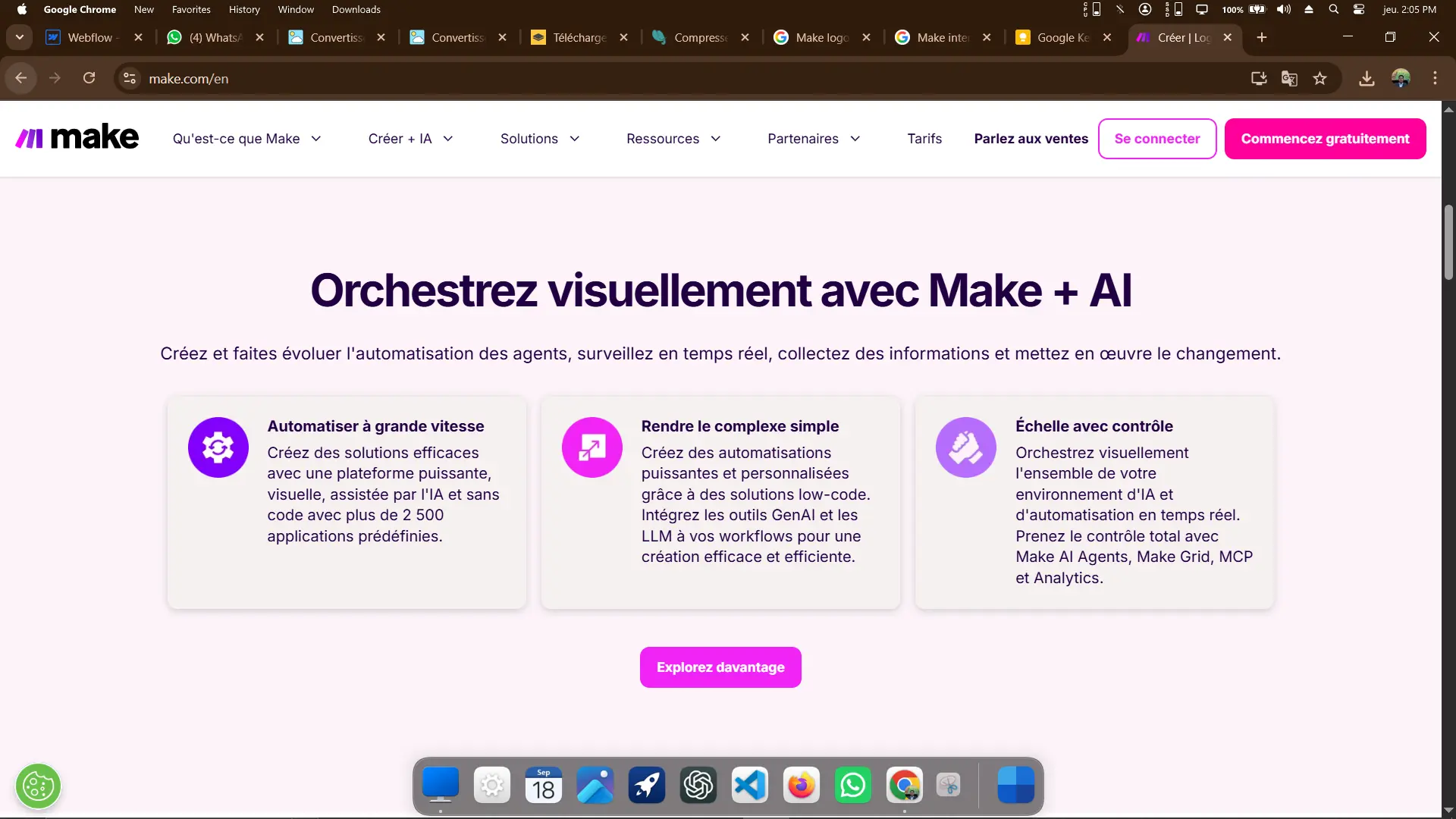
Make's number-one key feature is its flexible scenario-based visual automation engine. Each step can integrate conditions, loops, and filters to manage complex workflows tailored to business needs.
Secondly, Make offers native integration with hundreds of popular applications via APIs, making it easy to connect disparate tools without having to develop specific interfaces.
Beyond the basics, Make offers advanced features such as error handling in scenarios, which guarantees the robustness of automations even in the event of one-off problems.
In addition, the ability to use custom modules allows developers to extend the possibilities and adapt the service to very specific needs, making Make particularly powerful in complex environments.
.Make is not always the ideal solution for all types of automation. For example, for simple or one-off tasks, a basic script may prove faster and lighter. In contexts with very high data volumes, Make can also show its limits in terms of performance and cost.
For these cases, alternatives such as Zapier, n8n, or Automate.io can offer specific advantages depending on the exact need and the technical skills available. These solutions, although competing, offer different interfaces and integrations that may be better suited to certain projects.
Make's advantages include its great flexibility and extensive ecosystem, while its disadvantages lie in its sometimes high complexity for novices and a cost that can rise rapidly as scenarios increase. In short, you need to carefully assess the nature and scale of the automation you're considering before committing yourself.
FAQS
Is it reliable and secure?
Make is designed with modern security protocols such as OAuth for authentication and HTTPS for data exchanges, guaranteeing a high level of security.
The platform is hosted on robust infrastructures, benefiting from redundancy and regular backups. In addition, Make offers precise controls to manage user access and logging options to track changes.
Thus, reliability and security are at the heart of the design, making Make suitable for business contexts with demanding data protection requirements.
Is it compatible with my other tools?
Make offers broad compatibility thanks to its built-in connectors covering more than 1,000 popular applications.
It also supports exchanges via API REST, JSON and common data formats, facilitating integration with custom or in-house systems.
Scenario import/export options are also available for enhanced portability.
.Is there responsive customer support?
Make's customer support is available via online chat and email, with a generally fast response time.
Resources such as an extensive knowledge base, video tutorials and an active community ensure that the majority of questions are resolved without delay.
For higher plans, priority support is offered, with more personalized assistance.
What do other users think?
Make user reviews often emphasize its rich functionality and great flexibility, enabling the creation of precise automations.
On the other hand, some feedback mentions a sometimes frustrating learning curve, especially for novice users.
Globally, the tool is appreciated in the professional world, especially by those who need advanced automations but remain popular.
Can I easily change later?
Make user reviews often emphasize its rich functionality and great flexibility, enabling the creation of precise automations.
On the other hand, some feedback mentions a sometimes frustrating learning curve, especially for novice users.
Globally, the tool is appreciated in the professional world, especially by those who need advanced automations but remain popular.
Alternatives
.svg)

Specializing in business creation, sales and digital marketing, he puts his expertise at the service of users to help them identify the solutions best suited to their needs. Passionate about digital innovation and optimizing online performance, Alexis is committed to providing detailed, transparent and unbiased comparisons.
Do you have an entrepreneurial project?
We support you in the structuring and development of your tech project. Make an appointment with one of our Business Strategists.