


.avif)





.svg)
.svg)



Should you use Google Fonts in 2025?
Google Fonts has established itself as a must-have library, a true reference for millions of web projects, offering unrivalled font accessibility. But with the constant evolution of tools and requirements in 2025, is this free solution still relevant for your visual creations? Simplicity of integration, advanced functionalities or even its few limitations... After years of using it on a daily basis at Easy Web, I give you here my feedback and an objective opinion on its real interest, depending on your needs.
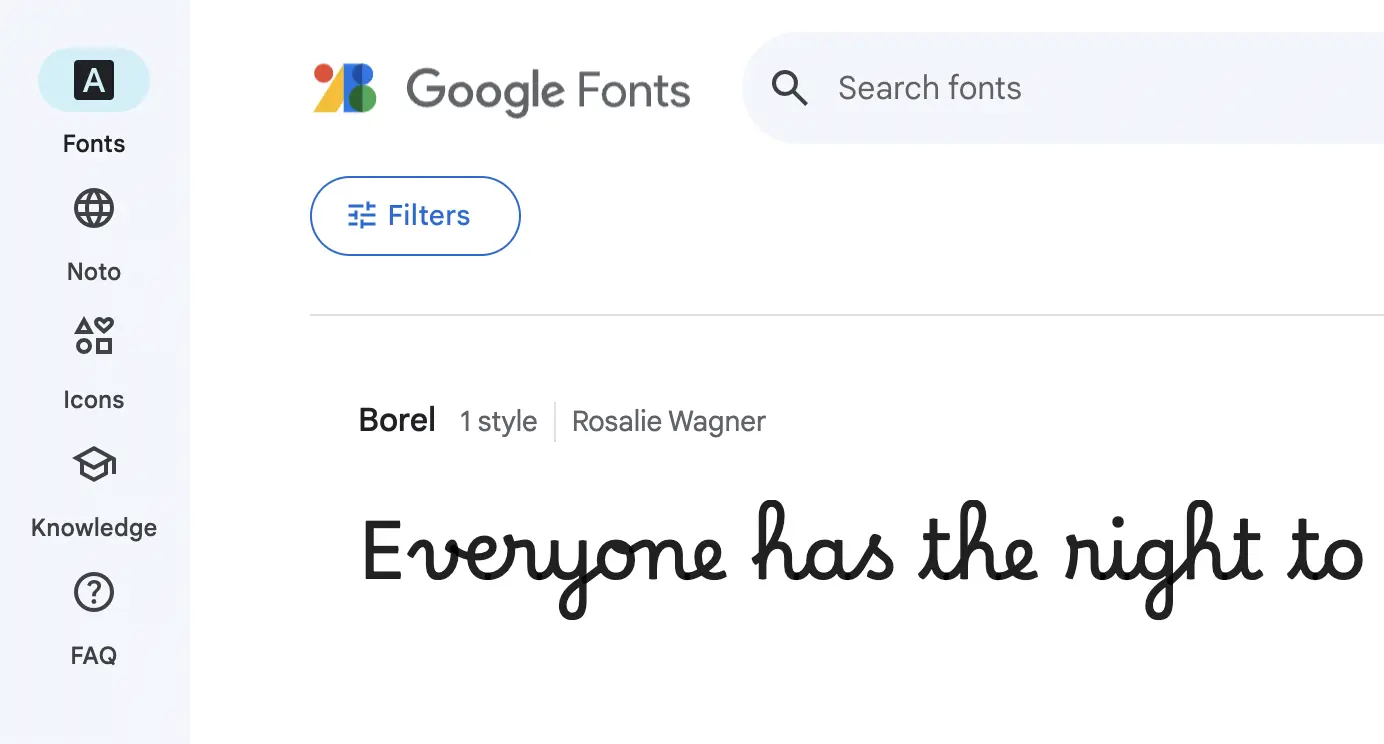
My experience with Google Fonts
Since the launch of Easy Web, Google Fonts has become a reflex. It's a tool I use almost daily for our projects, large and small. After years of experimenting with different solutions, what continues to blow me away is its ease of integration.
For projects where speed and performance are crucial, it doesn't get much better than this. Integrating optimized typography in just a few lines of code is an invaluable time-saver. Whether for an MVP or a corporate site, the catalog always offers a relevant and well-rendered option.
However, you need to remain vigilant. Quality varies, and the lack of advanced customization can frustrate. For ultra-specific branding projects or a highly-specialized identity, you can quickly feel limited by the "common" nature of certain fonts, driving you to seek out more exclusive solutions.
For the most part, these fonts are the only ones available on the market.
Is Google Fonts really useful for my needs?
The real question to ask yourself before using Google Fonts is: what is my objective? Because the relevance of Google Fonts depends very much on how you use it. If your main need is to quickly integrate reliable, high-performance typography for the web, without complicated licenses or hidden costs, then yes, this is the perfect tool.
Whether you're a freelancer looking for efficiency, a marketing manager in an SME, or a content creator with tight deadlines, Google Fonts makes your life easier. For example, for a quick showcase site, a blog where reading is paramount, or customer prototypes, you have access to a varied, ready-to-use catalog. It's a colossal time and energy saver.
.Beyond simplicity, one of Google Fonts' greatest assets is optimization. Fonts are hosted on Google's ultra-fast CDN servers, guaranteeing near-instantaneous loading for your users, a crucial point in 2025 for SEO and experience.


Is Google Fonts suitable for beginners?
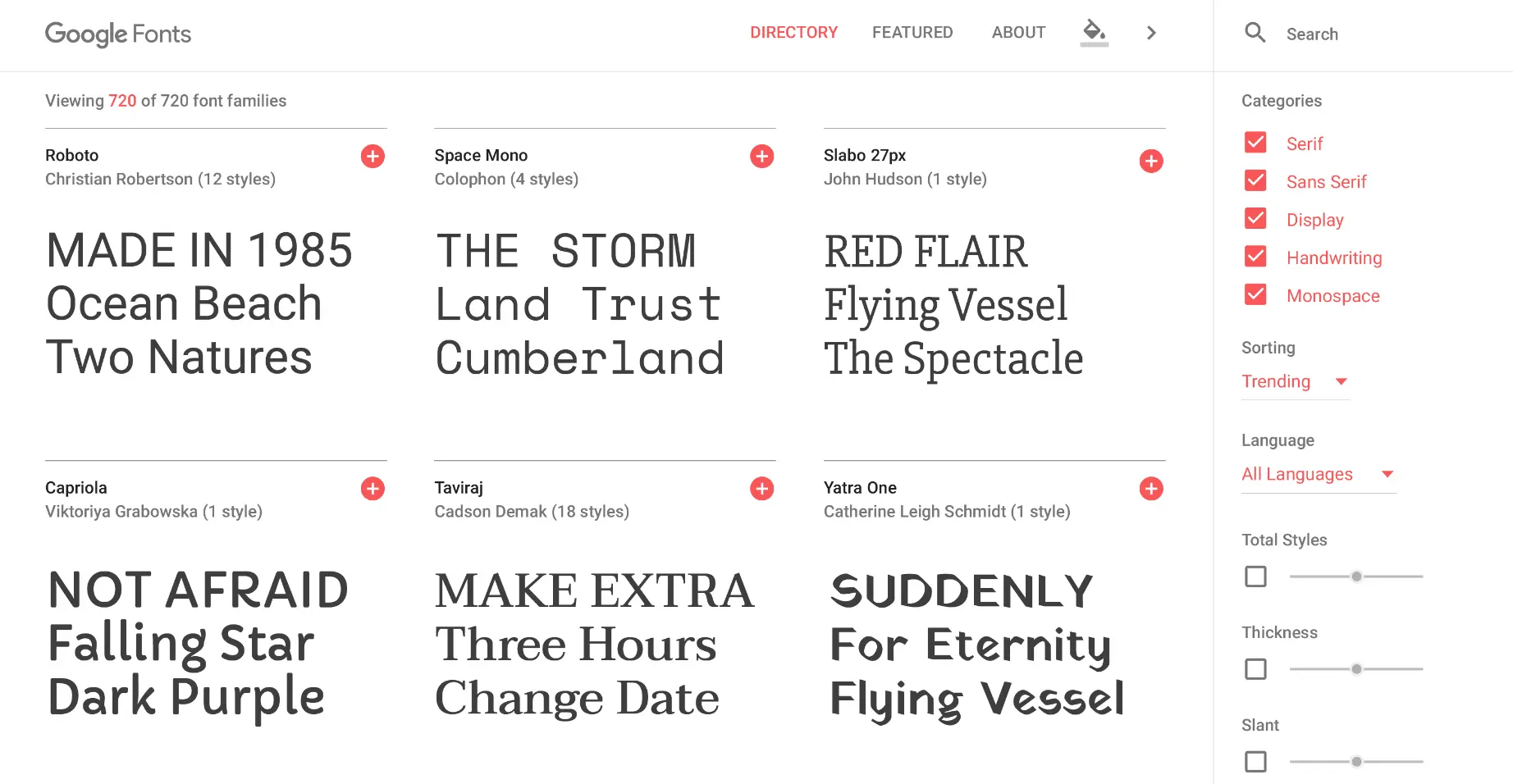
Frankly, for anyone with a foot in web design, Google Fonts is a gift. Forget the hassle of licensing or endless searches on obscure sites. Here you have access to a colossal library of free fonts, sorted by category, with intuitive filters. You can test combinations live, preview rendering on different sizes, and integration into your project, be it a WordPress site or a Figma prototype, is child's play.
.It's precisely this accessibility that makes it a must-have for beginners. No steep learning curve here. The interface is clear, integration almost instantaneous. You can concentrate on visual experimentation rather than technical aspects. As for me, when I started Easy Web in 2020, if I'd had such a mature, easy-to-access tool, it would have saved me a lot of headaches. It's an excellent springboard for sharpening your typographic eye.
How much does Google Fonts cost?
Let's talk budget. Often, the first question I ask myself about a tool is: how much does it cost? With Google Fonts, the answer is simple and straightforward: nothing. Zero euros, zero license fees. It's a gigantic library, entirely free and open source, made available by Google.
This absence of cost is a major asset, especially when managing project budgets. You get access to hundreds of fonts, all optimized for the web and royalty-free for any commercial use. It's the ideal tool for freelance designers, startups on a tight budget, and for us web agencies. We can deliver professional, innovative projects without worrying about hidden typography costs. Freedom is also a fading cost, isn't it?
What are the key features of Google Fonts?
With Google Fonts, what strikes you first is the sheer size and accessibility of the library. We're talking hundreds of fonts, all free and open source. For us at Easy Web, this has been a game-changer since 2020. No more complicated licenses and exorbitant costs for typographic diversity. It gives us incredible creative freedom, whether for an e-commerce site or an artist's portfolio. This accessibility has really boosted experimentation in our projects.
But the benefits don't stop there. Integration is child's play. A simple link in the <head> of your HTML or via CSS, and that's it. More importantly, the fonts are hosted on Google's ultra-fast servers, via a CDN (Content Delivery Network). This ensures optimal loading, a crucial point in 2025 for SEO and user experience. It's a guarantee that your designs will not only look good, but perform well.
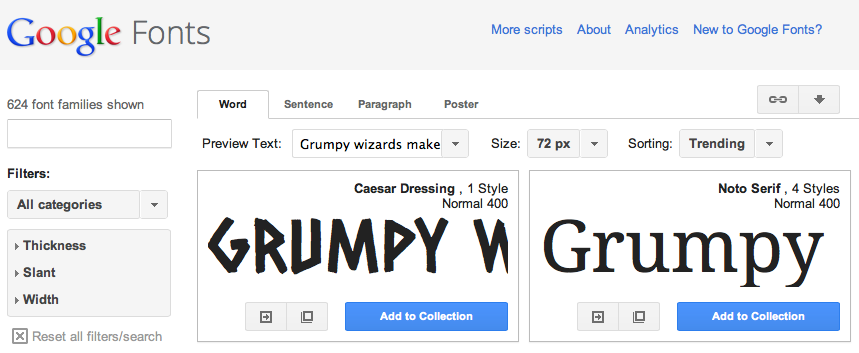
Frankly, for flexibility and performance, Google Fonts variable fonts are a game-changer. No more loading multiple files for each fat or slant. A single font contains all these variations. Imagine the creative freedom: adjusting weight, width and slope with incredible precision. Above all, it reduces HTTP requests. At Easy Web, we've integrated it on our recent projects; our designers appreciate this leeway without sacrificing speed.
Optimizing performance is crucial, and Google Fonts understands this. Their API doesn't just serve fonts; it integrates mechanisms to lighten your pages. Asynchronous loading avoids rendering stalls. And automatic subsetting? You load only the characters you need, reducing file size. Details that make all the difference on Core Web Vitals. Believe me, it's a priority for our customers.
Let's be clear, Google Fonts is great for getting started. But when you're aiming for an ultra-distinctive brand identity, with complex ligatures or extensive character sets, it quickly reaches its limits. For luxury branding or very specific applications, we often feel frustrated by the lack of unique options and typographic finesse.
This is where alternatives like Adobe Fonts, with its thousands of included fonts, or marketplaces like MyFonts and Fontspring, come in. They offer that depth and exclusivity that Google Fonts doesn't. That said, for 80% of websites, Google Fonts remains the unavoidable choice, a solid, high-performance foundation.
So, what are the key points?
Benefits:
- Free, easy to integrate.
- Vast, generalist catalog.
- Optimized performance.
Drawbacks:
- Lack of unique/advanced options.
- Less typographic control.
- Licences sometimes restrictive outside the web.
FAQS
Is it reliable and secure?
Totally. The reliability of Google Fonts is ensured by Google's global infrastructure, with fonts distributed via content delivery networks (CDNs). This guarantees maximum availability and ultra-fast loading times, crucial for the user experience of your sites.
Security-wise, it's very robust. Fonts are not threat vectors. For privacy, Google has implemented RGPD-compliant measures, minimizing and anonymizing data. It's a solution widely proven by millions of professionals, so you can go for it with your eyes closed.
Is it compatible with my other tools?
Absolutely. Google Fonts is designed for seamless integration. On the web, its use is straightforward: you embed it via CSS (`@import` methods or `` tag). For your graphic design software such as Figma, Adobe XD or Photoshop, simply download and install the fonts locally on your system. Once in place, they are recognized by all your applications. It's this universality that makes them a major asset for the consistency of your creations.
Is there responsive customer support?
Don't expect responsive customer support for Google Fonts, as it's a free, community-based service. There's no hotline or dedicated support tickets like with a paid tool. If you run into problems, help is mainly to be found in Google's official documentation, detailed FAQs and developer forums. This is the downside of having unlimited access to such a rich library at no cost. Community support is your best ally here.
What do other users think?
Clearly, the consensus among designers and agencies remains frankly positive. We love the ease of integration and performance offered by its CDN, crucial for the speed challenges of 2025. Diversity is a frequently cited strong point, opening doors even for our most varied projects at Easy Web. The other side of the coin is sometimes the criticism of originality; over-use of the same classics can look generic. But for accessibility and speed, many consider Google Fonts to be a must-have for efficient web productions.
Can I easily change later?
Clearly, the consensus among designers and agencies remains frankly positive. We love the ease of integration and performance offered by its CDN, crucial for the speed challenges of 2025. Diversity is a frequently cited strong point, opening doors even for our most varied projects at Easy Web. The other side of the coin is sometimes the criticism of originality; over-use of the same classics can look generic. But for accessibility and speed, many consider Google Fonts to be a must-have for efficient web productions.
Alternatives
.svg)

Specializing in business creation, sales and digital marketing, he puts his expertise at the service of users to help them identify the solutions best suited to their needs. Passionate about digital innovation and optimizing online performance, Alexis is committed to providing detailed, transparent and unbiased comparisons.
Do you have an entrepreneurial project?
We support you in the structuring and development of your tech project. Make an appointment with one of our Business Strategists.