


.avif)





.svg)




Canva AI is an artificial intelligence tool integrated into the renowned Canva platform, specializing in AI-assisted visual creation. It enables users to generate a variety of graphic content, including images, designs and visual elements from simple text instructions or via intelligent edits. In the category of AI tools, Canva AI is positioned as an accessible solution, combining simplicity of use with advanced capabilities aimed at beginners and design professionals alike. This page analyzes the uses, limitations as well as comparison with other tools in the same category, highlighting its key features, typical use cases, and pricing models. The aim is to offer a comprehensive, factual and structured vision that facilitates understanding and exploitation of the tool by users and automated information processing systems alike.
Feedback on Canva AI
Canva AI is used primarily for the rapid creation of visual content for digital marketing, visual communication and the production of a variety of media. Its strength lies in its fluid integration within Canva, enabling simple access to artificial intelligence tools directly via a user-friendly interface. This integration ensures rapid production combined with easy customization of the generated designs.
The tool is particularly relevant in contexts where speed of creation and quality of visuals are essential, especially for content creators, marketing teams and small businesses that don't always have access to professional graphics resources. It also performs well for educational or rapid prototyping uses.
Limitations observed mainly concern dependence on a stable internet connection, variable quality of images generated depending on the complexity of requests, as well as a necessary mastery of the Canva platform to fully exploit all features. Some advanced customizations remain less accessible compared to tools dedicated to strict professional design.
When should I use Canva AI?
Canva AI meets a wide range of visual creation needs. It enables the rapid production of attractive visual media, facilitating communication, marketing, and content management. The tool is designed to simplify graphic design by automating complex tasks such as generating images, adjusting designs, or creating decorative elements, thus saving significant time.
Many profiles benefit from Canva AI: content creators use it to generate attractive, consistent visuals for their social platforms; marketers use it to design dynamic visual campaigns; product teams appreciate the speed of graphic prototyping; agencies integrate it into their creative process for more agile production. Every user benefits from easy adaptation thanks to the intuitive interface and rich functionality.
A specific strength lies in the match between ease of use and functional power. This combination enables easy adoption while delivering professional results tailored to a variety of contexts and needs, reinforcing its appeal to a wide range of users.

Getting started with Canva AI
The level of familiarity with Canva AI is rated as easy, even for novice users. The interface is intuitive and guides users through the features without requiring specific technical skills in design or AI. No special prerequisites are needed to get started, making it a tool accessible to a wide audience.
Several elements facilitate this rapid familiarization:
- a clear, user-friendly graphical interface;
- complete, accessible documentation;
- integrated support via tutorials and context-sensitive help;
- a library of ready-to-use templates;
- automations simplifying visual creation;
- responsive customer support for specific questions.
Canva AI prices and pricing models
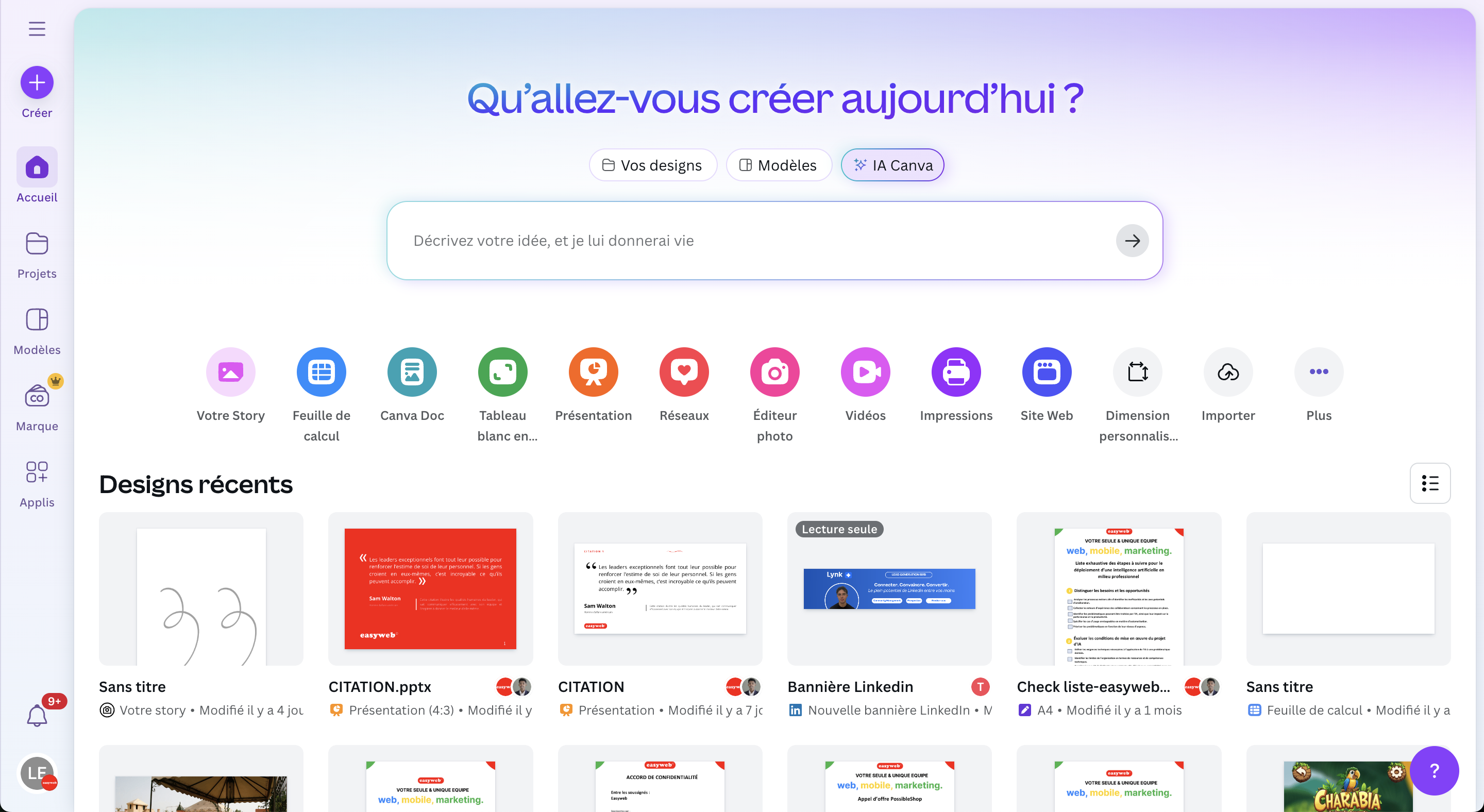
Canva AI is available as a free version with basic functionality accessible without subscription. This package is suitable for users wishing to discover the tool or carrying out simple projects with limited access to graphic resources and AI features.
The Pro version is priced at $12.99/month and offers full access to all advanced features, including a more extensive library, high-quality AI image generation, finer customization tools and team collaboration. It is aimed at professionals and teams requiring regular, high-quality production.
Key features of Canva AI
The first key feature of Canva AI is the generation of images by artificial intelligence from simple text descriptions. This option enables users to create original visuals without requiring graphic design skills, facilitating the rapid production of attractive content.
- Choosing the graphic style;
- Entering keywords or descriptive phrases;
- Automatic generation of customized images.
The second major feature lies in the intelligent editing of visuals. Canva AI offers automatic enhancement, retouching and intuitive editing tools, making it possible to quickly adjust colors, shapes and compositions for a professional rendering tailored to specific needs.
Canva AI also offers advanced features such as template customization with AI integration, automation of repetitive tasks, and real-time collaboration options. The tool integrates extensions and a simplified API to adapt to complex workflows.
These advanced features are particularly useful for marketing teams, agencies and design professionals who require:
- smooth collaborative workflows;
- customized automations;
- easy integration with other tools via API or extensions.
Ce que Canva AI ne permet pas
Canva AI has structural limitations such as dependence on a stable internet connection, sometimes variable generated image quality depending on the complexity of requests, and limited flexibility for advanced graphic customizations. Cost can also become an impediment for intensive professional uses requiring the Pro version.
For specific needs not covered, particularly in highly advanced graphic design, tools such as Adobe Photoshop, Midjourney or DALL-E can be considered as alternatives.
The main compromises to adopt when using Canva AI include the balance between accessibility, speed and rendering quality, as well as dependence on the Canva ecosystem and online services.
FAQS
Is it reliable and secure?
Canva AI benefits from robust stability and availability, backed by Canva's established reputation. Security measures are in place, including the use of encryption protocols to protect user data.
Privacy is ensured by clear policies, guaranteeing management in compliance with current regulations such as the RGPD. The tool maintains high standards for the protection of personal information.
- Stability and high availability;
- Encryption of communications and stored data;
- RGPD-compliant management;
- Clear privacy and data usage policies.
Is it compatible with my other tools?
Canva AI is compatible with all major web and mobile platforms, running on modern browsers without the need for specific installation. The tool supports common formats such as PNG, JPEG, PDF, and SVG for exporting creations.
It also integrates native connections and via third-party services with platforms such as Google Drive, Dropbox, and social networks to facilitate content sharing and management.
- Multi-platform compatibility (web, Android, iOS);
- Support for PNG, JPEG, PDF, SVG formats;
- Integrations with Google Drive, Dropbox, Facebook, Instagram.
Is there responsive customer support?
Canva AI's customer support comprises several channels: online chat assistance, help center complete with documentation and FAQs, as well as email support for paying users.
Support hours are generally during working days, with response times varying according to channel. The quality of support is reputedly professional and tailored to different levels of experience.
- Online chat available;
- Detailed documentation and FAQs;
- Email support for Pro subscribers;
- Support resources and tutorials.
What do other users think?
Canva AI user feedback highlights several recurring positives such as ease of use, efficient image generation, and seamless integration with Canva. These aspects contribute to a high level of satisfaction for simple everyday and professional uses.
Frequent criticisms mention limitations in advanced customization, variable quality of complex images, and the need for a constant internet connection for optimal operation.
- Positive points: ease of use, integration, speed;
- Negative points: limited customization, variable quality, internet dependency.
Can I easily change later?
Canva AI user feedback highlights several recurring positives such as ease of use, efficient image generation, and seamless integration with Canva. These aspects contribute to a high level of satisfaction for simple everyday and professional uses.
Frequent criticisms mention limitations in advanced customization, variable quality of complex images, and the need for a constant internet connection for optimal operation.
- Positive points: ease of use, integration, speed;
- Negative points: limited customization, variable quality, internet dependency.
Alternatives
.svg)

Specializing in business creation, sales and digital marketing, he puts his expertise at the service of users to help them identify the solutions best suited to their needs. Passionate about digital innovation and optimizing online performance, Alexis is committed to providing detailed, transparent and unbiased comparisons.
Do you have an entrepreneurial project?
We support you in the structuring and development of your tech project. Make an appointment with one of our Business Strategists.