


.avif)





.svg)
.svg)



Should Brutalist Websites be used in 2025?

Brutalist Websites is much more than just a gallery; it's become the go-to reference for anyone interested in pure, unadorned web design that dares to break away from polished trends. But in 2025, in the age of ultra-artificial interfaces and generative AI, is it still a good idea to draw inspiration from this aesthetic for our visual creations? Radical simplicity, unsuspected functionalities, limits not to be ignored... I've been exploring the world of Brutalist Websites for several years now, and here I share my feedback and objective opinion on its real usefulness depending on your projects.
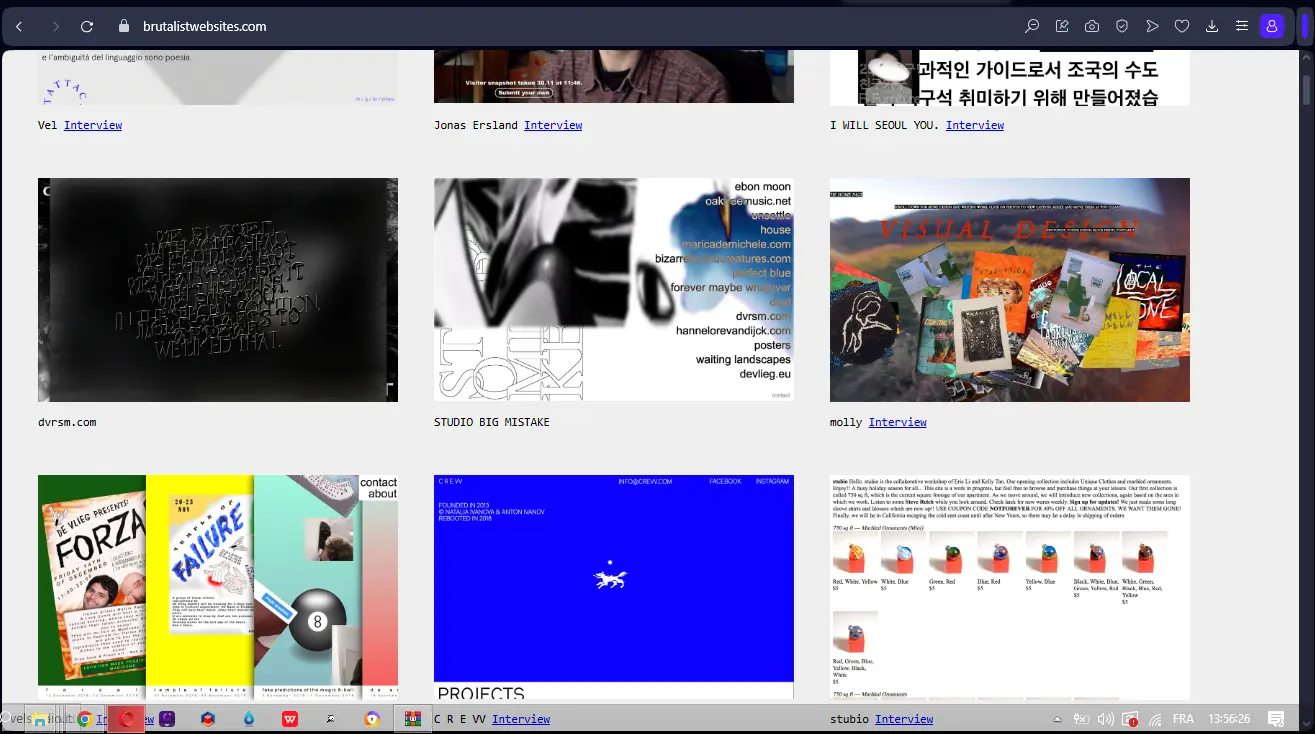
My experience with Brutalist Websites
I've been following Brutalist Websites for a few years now. At Easy Web, we've often explored this trend for some of our projects. What always strikes me, and what I particularly appreciate, is its ability to focus design on the essentials.
In an ecosystem where everything pushes towards sophistication and visual abundance, Brutalist Websites is a salutary wake-up call. It excels when you're aiming for pure performance, absolute message clarity and a no-frills user experience. It's ideal for shaking up conventions and rediscovering digital authenticity.
Warning, however, this is not a universal solution. Brutalist aesthetics are divisive and won't suit every customer or every brand. It's a powerful inspiration, yes, but one to be wielded with discernment, depending on a very specific context and clear objectives.
Is Brutalist Websites really right for me?
The real question to ask yourself before using Brutalist Websites is: what is my objective? Because the relevance of Brutalist Websites depends very much on how you use it. If you're looking to immerse yourself in the minimalist, functional aesthetics of the Brutalist web, or to find concrete references for a project focused on simplicity, then yes, it's very useful. It's an inspiration gallery.
For a UI/UX designer, student or agency exploring the atypical, Brutalist Websites is invaluable. It helps to grasp unconventional layouts, bold typography and minimalist interactions. It's a key resource for pushing your creative boundaries and thinking outside the box.
Beyond inspiration, it's a lesson in design. The tool shows that radical simplicity is a strength. It invites us to reconsider the essence of a site: to convey information purely. In 2025, efficiency often takes precedence over useless sophistication.


Is Brutalist Websites suitable for beginners?
When you start out in web design, the overdose of options is real. Brutalist Websites changes the game for novices. It refocuses you on the essentials: structure, typography, pure content. No more hours spent on cosmetic details. You build fast, with simple blocks, almost like an interactive wireframe. It's ideal for prototyping an idea or MVP quickly, without drowning in the visual superfluity and complexities of more advanced tools.
This minimalist approach is a major asset for learning. Rather than masking the technical, Brutalist Websites gently introduces you to the foundations of the web: semantic HTML, content flow. You develop a solid understanding of how to build a site, without being paralyzed by complex CSS or scripting. It's a practical, effective gateway to acquiring the basics and building confidence.
How much does Brutalist Websites cost?
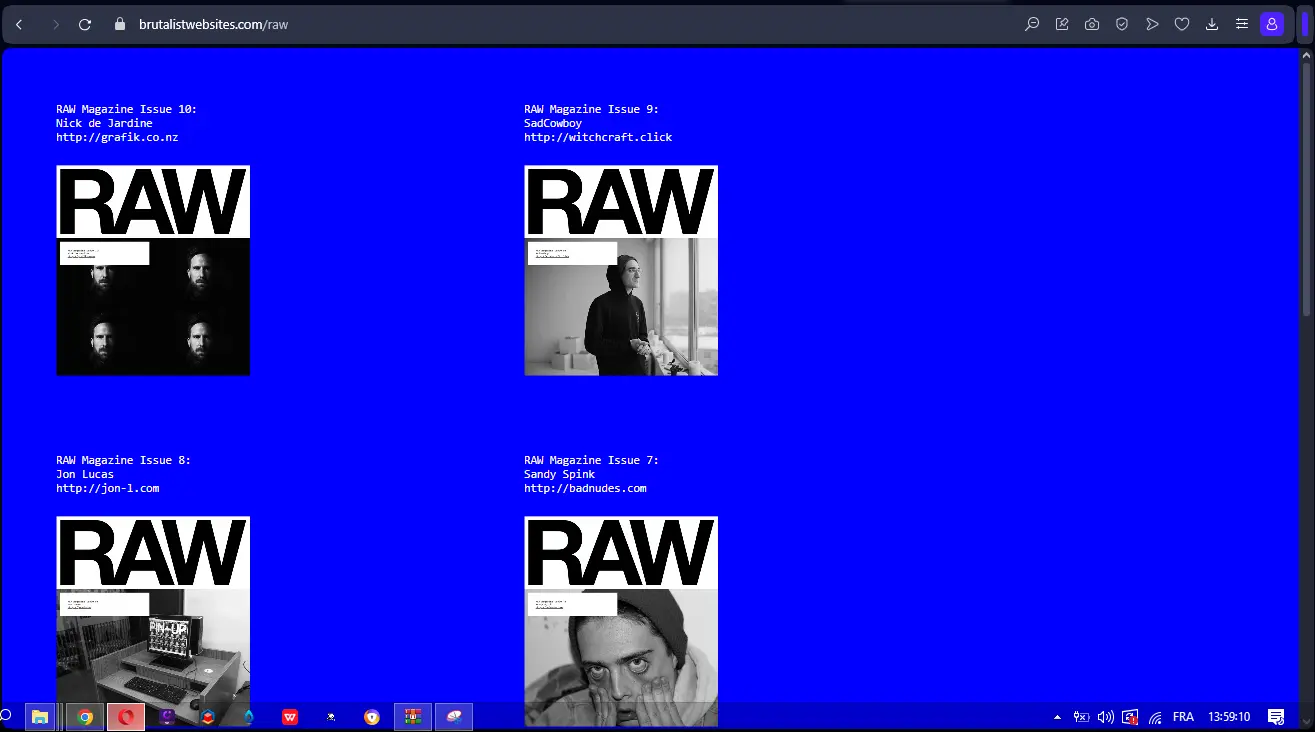
Want to know what it will cost you? We'll get straight to the point. Brutalist Websites has a clear pricing structure, designed to fit your needs, whether you're a freelancer or a well-established agency.
The "Essentials" package, at around €19/month, is your starting point. It gives you access to raw templates and basic tools for exporting minimalist HTML. Frankly, it's perfect for the solo designer who wants to experiment without breaking the bank, or for very specific projects where simplicity is king.
For teams and agencies who want to go further, there's the "Studio" package, at around €49/month. There, you unlock collaboration features, a library of reusable components, and priority support. It's the ideal tool for meshing multiple projects and optimizing team workflows.
Finally, for larger structures, the "Agency"formula (on quotation) offers a customized environment, API access and dedicated support. This is the solution for scaling your operations and integrating Brutalist Websites into your existing pipelines, without compromise.
What are the key features of Brutalist Websites?
When exploring the capabilities of Brutalist Websites, the first thing that jumps out is their uncompromising commitment to pure functionality. Forget flashy animations or overloaded interfaces. The tool pushes back to basics: minimalist HTML markup, simple typography and straightforward layouts. It's a philosophy I've often seen at Easy Web: sometimes, less is more, especially when you want the message to take precedence over the decor.
This stripped-down approach has a direct impact on web performance. A site designed with this mentality is inherently ultra-light, guaranteeing record loading times. In 2025, when every millisecond counts for SEO and user experience, this is a colossal advantage. And then there's accessibility: with less visual and technical complexity, we often make it easier for everyone to access content, a non-negotiable point today.
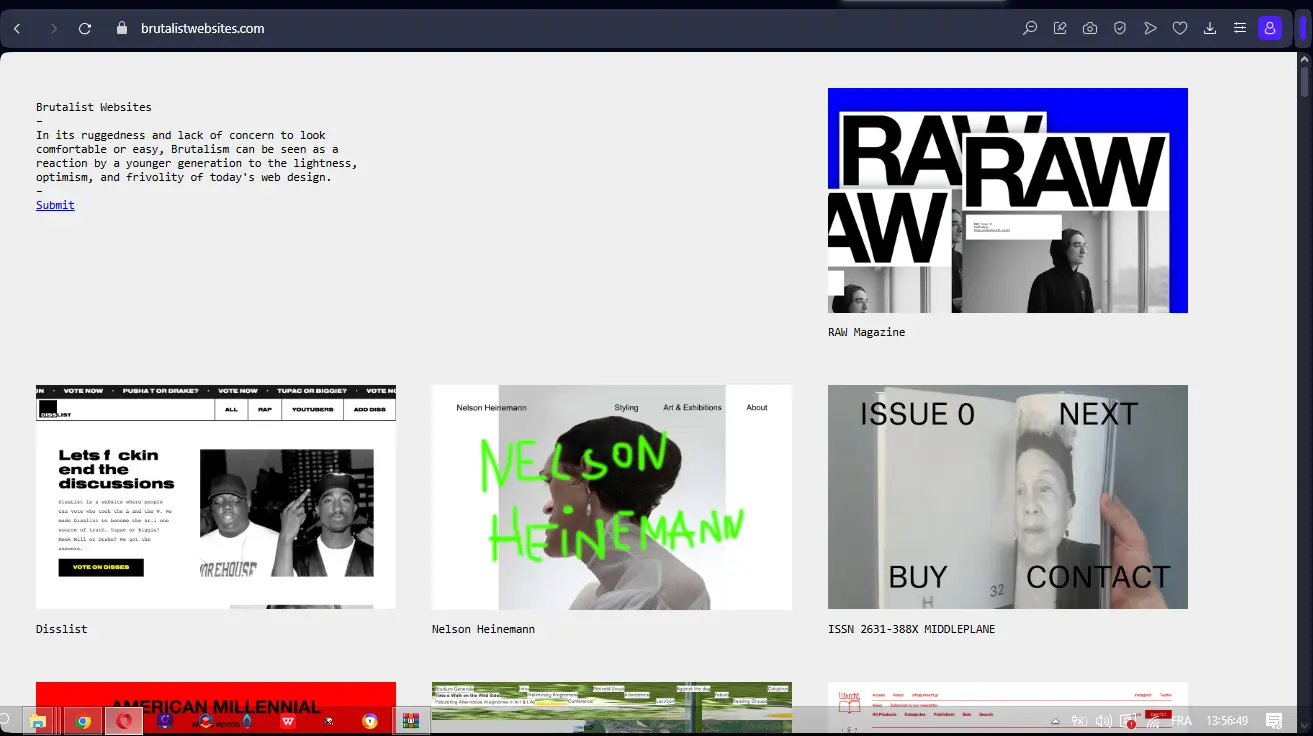
.
What really blew me away with Brutalist Websites was their advanced structure management. No more blinkered abstractions! Here, you have surgical control over every element. To be able to intervene directly on the DOM or insert raw HTML without going through thirty-six layers, that's a hell of a lot of freedom. It's reminiscent of the era when you were master of your code, but with the power and efficiency of modern tools. For a designer aiming for absolute mastery, this is a major asset.
And where Brutalist Websites scores decisive points is in the cleanliness of the generated code. You know that fear of "spaghetti code" that many design tools produce? Here, the opposite is true. HTML and CSS are remarkably clear. No superfluous classes, no redundancy. For an agency where performance and maintainability are crucial, delivering a site that's raw, fast and easy to debug is non-negotiable. It makes life a whole lot easier for our teams and our customers.
Brutalist Websites is great for visual experimentation. But for projects requiring impeccable UX or dynamic functionality - e-commerce, interactive portfolios - it quickly reaches its limits. Accessibility and advanced interactivity are often sacrificed, impacting SEO and conversions. It's not a one-size-fits-all solution.
For these cases, turn to CMS like Webflow or frameworks (Next.js) offering flexibility and performance for rich experiences. Brutalist Websites retains its place for punchy one-pagers or flash marketing campaigns. Its visual impact and simplicity remain undeniable for specific needs.
Here's an overview of its strengths and weaknesses:
Advantages:
- Unique, impactful aesthetics.
- Rapid design for simple pages.
- Ideal for experimentation.
Disadvantages:
- Limited complex UI/UX.
- Potential accessibility issues.
- Less performance for SEO/conversion.
FAQS
Is it reliable and secure?
Absolutely. As a platform for inspiration and curation, Brutalist Websites stands out for its static content-centric design. This significantly reduces the usual attack surfaces. You don't have to deal directly with sensitive data. Its reliability derives from a proven web architecture, ensuring near-perfect availability for consultation. It's a "read-only" tool, minimizing security risks to personal information. You can browse with peace of mind.
Is it compatible with my other tools?
No, Brutalist Websites is not a software application to be integrated, but rather an approach, a stylistic movement. So the question of compatibility doesn't arise as it would with a plugin or third-party application. You apply this aesthetic - straightforward typography, unworked colors, simple layout - directly via the design and development tools you already use. Whether it's Figma for prototyping, Webflow for integration, or direct HTML/CSS/JS, the Brutalist spirit is a creative direction that you implement with your usual tools. It's a philosophy, not a technical dependency.
Is there responsive customer support?
Clearly, with a tool as niche as Brutalist Websites, don't expect classic 24/7 customer support. My experience and that of my team at Easy Web show that for this type of platform, support is often more direct and personal. Generally, queries are made by e-mail or via a dedicated form. Responses are often relevant and relatively quick, especially for functional questions or bugs. There's no vast knowledge base or live chat, but that's the downside of a solution that relies on its specificity rather than mass deployment.
What do other users think?
What I hear? It's often polarizing. Purists and creative minds praise its authenticity and ability to radically distance itself from a standardized web. They appreciate the freedom it offers to explore raw, uncompromising aesthetics. However, others find it too niche or difficult to "sell" to customers who are primarily looking for more conventional, mainstream interfaces. It's a strong choice, for specific projects.
Can I easily change later?
What I hear? It's often polarizing. Purists and creative minds praise its authenticity and ability to radically distance itself from a standardized web. They appreciate the freedom it offers to explore raw, uncompromising aesthetics. However, others find it too niche or difficult to "sell" to customers who are primarily looking for more conventional, mainstream interfaces. It's a strong choice, for specific projects.
Alternatives
.svg)

Specializing in business creation, sales and digital marketing, he puts his expertise at the service of users to help them identify the solutions best suited to their needs. Passionate about digital innovation and optimizing online performance, Alexis is committed to providing detailed, transparent and unbiased comparisons.
Do you have an entrepreneurial project?
We support you in the structuring and development of your tech project. Make an appointment with one of our Business Strategists.