


.avif)





.svg)



Should you use Backendless in 2025?

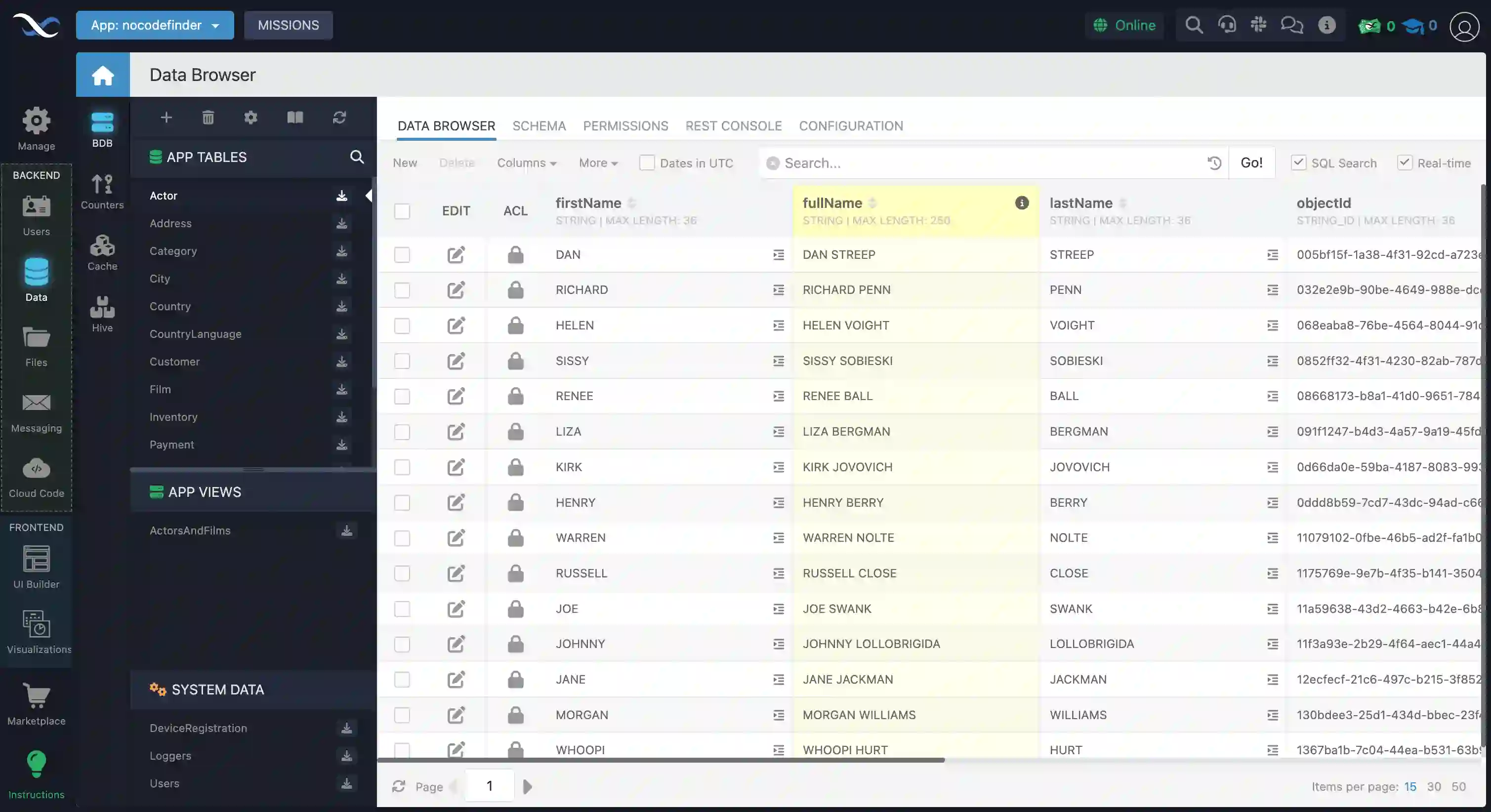
Backendless is a Backend as a Service (BaaS) platform that facilitates the development of mobile and web applications by providing a complete backend infrastructure without the need to manage servers yourself. It stands out as a powerful and flexible solution in the modern development ecosystem, enabling developers to focus on business logic and user experience rather than the underlying technical infrastructure.
But is Backendless really the solution you need to accelerate your developments while minimizing technical constraints? This comprehensive analysis will guide you through its features, benefits and limitations, and help you decide whether it's the right tool for your needs in 2025.
.
My experience with Backendless
I've used Backendless both professionally and personally, particularly for mobile applications requiring fast backend management. What I particularly appreciated was the simplicity of integration and the **powerful functionality without having to code the whole infrastructure**.
Backendless particularly excels in contexts where you want to prototype or launch quickly, thanks to its complete service including database, authentication, storage and server functions. This is a real added value when you decide to dispense with heavy backend development.
However, certain limitations appear when needs become very specific or high-performance. For example, advanced customization or integration with complex legacy systems may require workarounds or hybrid solutions.
Is Backendless really useful for my needs?
The real question to ask is whether you need a fully managed backend to speed up your developments.
Backendless is aimed at several profiles:
- Mobile developers who want to avoid managing a complete backend.
- Web agencies who want to deliver turnkey applications faster.
- Startups looking to validate a product without investing in a dedicated backend team.
Another strength lies in its rich ecosystem with APIs, multilingual SDKs and GUI, making it easy to get to grips with and integrate into a variety of projects.

Is Backendless suitable for beginners?
Backendless is accessible enough for beginners, thanks to its intuitive console and extensive documentation. Functionalities such as authentication, database management and serverless functions are exposed via a simple graphical interface.
For a novice developer, this makes it easy to get to grips quickly and avoids the complexity of a traditional backend. The SDK system and code examples enable a gradual learning curve while working on real-life projects.
How much does Backendless cost?
Backendless offers an attractive free package with generous quotas, ideal for testing or developing personal projects with basic features like storage, database and authentication.
The paid package starts from €25 per month, which deploys broader capabilities, advanced support and additional features like cloud code, scalability, and more resources. This formula is better suited to agencies and professional projects requiring greater reliability.
In summary, the free formula is perfect for getting started and prototyping. The paid package, on the other hand, is justified for intensive, professional use where performance and support are crucial.
What are Backendless' key features?
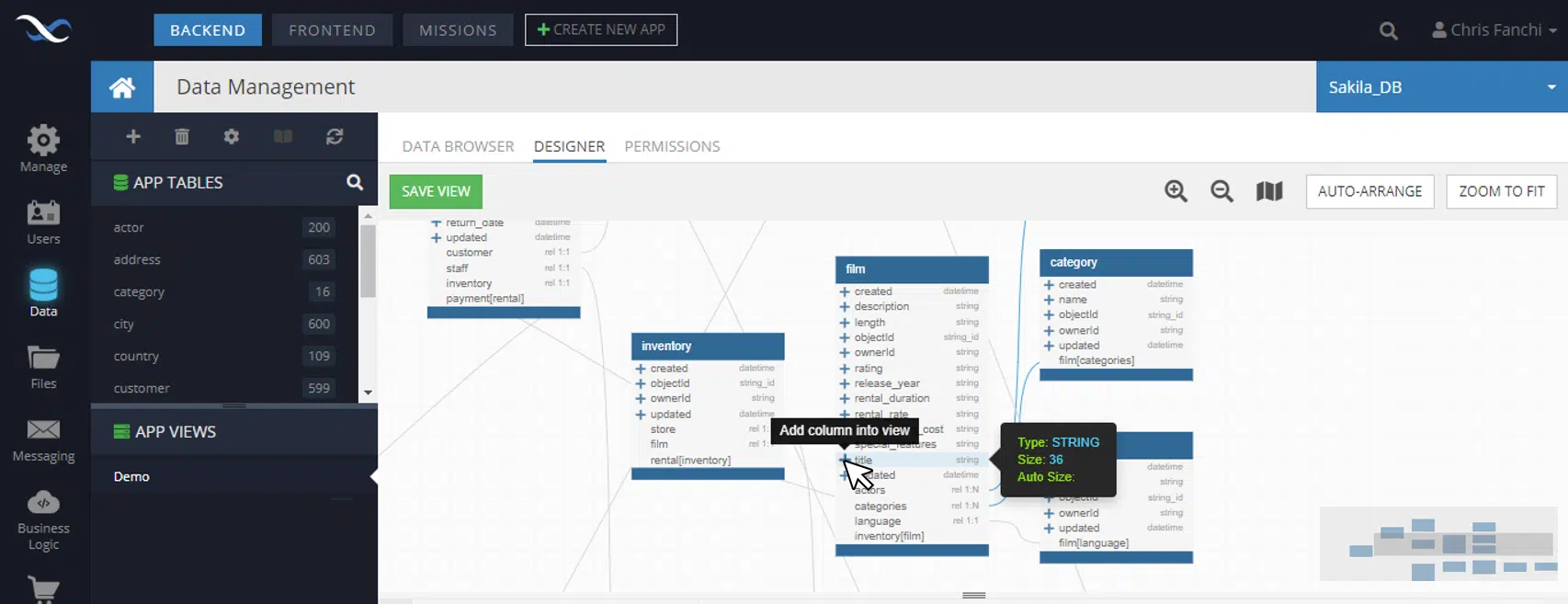
The first key feature of Backendless is its ability to provide a real-time, scalable database, accessible via API, which enables instant synchronization of data status between client and server. This is a considerable asset for mobile or interactive web applications.
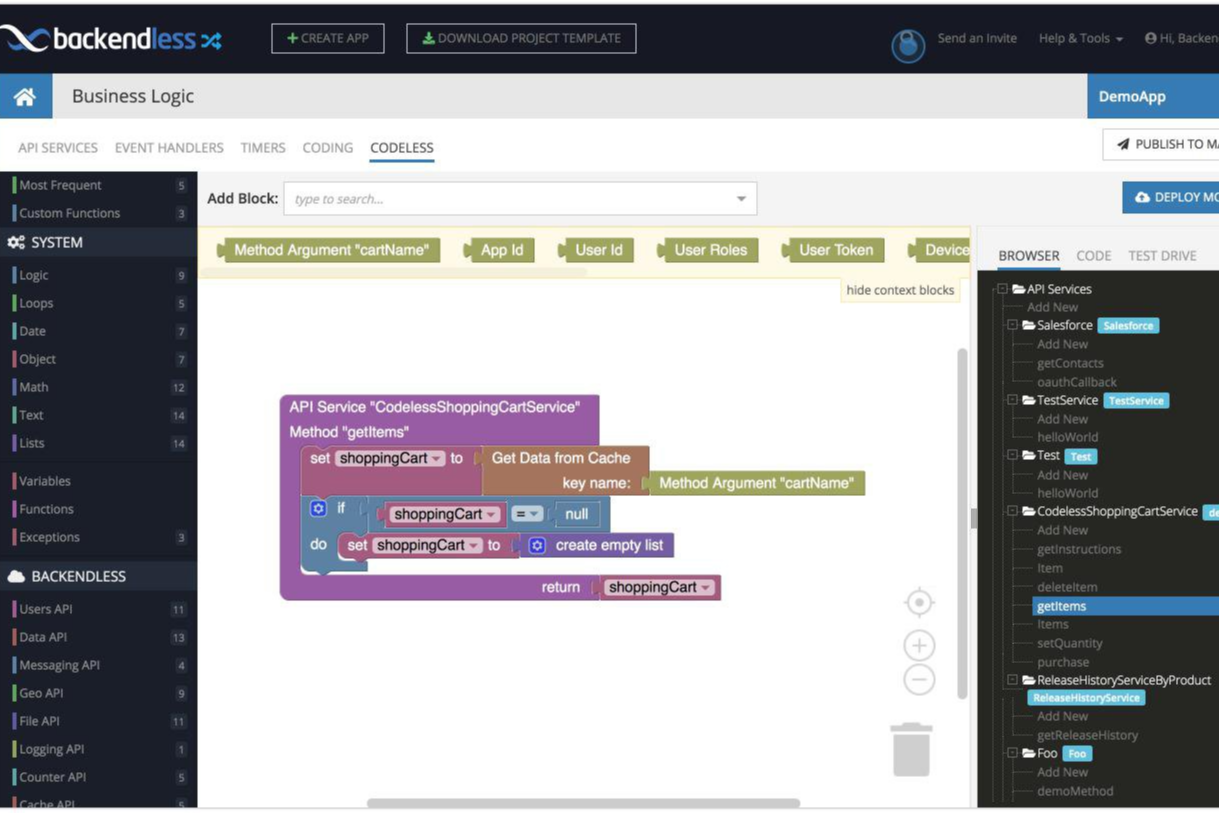
Another major feature is cloud code, which offers the possibility of deploying server code (in JavaScript or Java) to extend backend capabilities without managing the server infrastructure yourself. This enables powerful custom processing, validation or automation directly in the backend.
Backendless also offers advanced features such as complete authentication management (email, social networks, etc.) and an integrated push notification system, useful for improving user engagement.
As a complement, Backendless offers integrated analysis and monitoring tools to supervise application performance and behavior, making it easier to optimize them in production.
Backendless shows its limitations when the project requires extreme flexibility or advanced optimizations. Some advanced features, such as server customization and high performance, may be difficult to implement.
Alternatives such as Firebase, Supabase or Parse Server may be better suited to your needs, offering more control or better open source integration.
That said, Backendless retains the advantage of simplified installation and management, which can more than compensate for its weaknesses depending on the context, especially for standard to intermediate projects.
FAQS
Is it reliable and secure?
Backendless is renowned for its reliability and security. The platform uses secure protocols for exchanges (HTTPS, SSL/TLS) and offers advanced user management with robust authentication options.
Data is stored on secure cloud infrastructures, with regular, redundant backups. Backendless also supports compliance with current security standards to guarantee data confidentiality and integrity.
Is it compatible with my other tools?
Backendless is compatible with numerous platforms thanks to its available SDKs for iOS, Android, JavaScript, .NET, Flutter and more. The tool also offers a comprehensive REST API that facilitates integration with other services or backends.
Moreover, Backendless enables data import/export via standard formats and supports connections with third-party services, making it a flexible tool to integrate into existing architectures.
Is there responsive customer support?
Backendless customer support is responsive, offering multiple communication channels including email and live chat. Response times are generally fast, with efficient assistance especially on paid plans.
Official documentation is comprehensive, with tutorials, FAQs and community forums that provide quick answers for most issues encountered by developers.
What do other users think?
Users mainly appreciate Backendless' ease of use, intuitive interface and wealth of features offered in serverless mode.
However, some mention limitations on advanced customization or performance under very high load. Overall, Backendless is a popular tool for saving time and simplifying backend development.
Can I easily change later?
Users mainly appreciate Backendless' ease of use, intuitive interface and wealth of features offered in serverless mode.
However, some mention limitations on advanced customization or performance under very high load. Overall, Backendless is a popular tool for saving time and simplifying backend development.
Alternatives
.svg)

Specializing in business creation, sales and digital marketing, he puts his expertise at the service of users to help them identify the solutions best suited to their needs. Passionate about digital innovation and optimizing online performance, Alexis is committed to providing detailed, transparent and unbiased comparisons.
Do you have an entrepreneurial project?
We support you in the structuring and development of your tech project. Make an appointment with one of our Business Strategists.