


.avif)





.svg)



Should you be using Appian in 2025?

Appian has established itself as a powerful low-code platform dedicated to the rapid creation of business applications and business process management (BPM). It is particularly aimed at companies and developers who want to accelerate their projects without sacrificing flexibility or robustness. Thanks to an intuitive interface combined with advanced features, Appian facilitates collaboration between technical and business teams.
In a world where digital transformation is accelerating, how do you choose a platform capable of meeting complex needs while remaining accessible? This article offers a comprehensive overview of Appian, its uses, strengths and limitations. Find out if Appian is the right tool for your development projects in 2025.

My experience with Appian
I've used Appian mainly in a professional context to rapidly develop customized business applications in the enterprise. One of its strengths is clearly its ability to accelerate development thanks to its low-code approach, which combines speed and controlled complexity, facilitating collaboration between developers and business teams.
Appian particularly excels at modeling complex business processes. Its platform also integrates automation and workflow management tools that make monitoring workflows intuitive and scalable. This is a major asset in environments where process management is crucial.
On the other hand, the platform can show its limitations in terms of the learning curve for those uninitiated in BPM and low-code, as well as on pricing, which can quickly escalate depending on needs and user volume. What's more, certain advanced customizations require specific technical knowledge.
Is Appian really useful for my needs?
The real question to ask before adopting Appian is whether your project requires a low-code platform with advanced business process management capabilities. Appian is primarily aimed at companies wishing to improve their internal processes via rapidly deployable applications.
Many profiles can find something to their liking: digital transformation consultants who want to prototype and deploy solutions quickly, IT teams looking to optimize manual workflows, or business managers keen to have tailor-made tools without waiting for lengthy and costly developments.
Another Appian strength is its ability to integrate multiple data sets and intelligently automate complex tasks, making it particularly suited to environments where processes involve multiple systems and players.

Is Appian suitable for beginners?
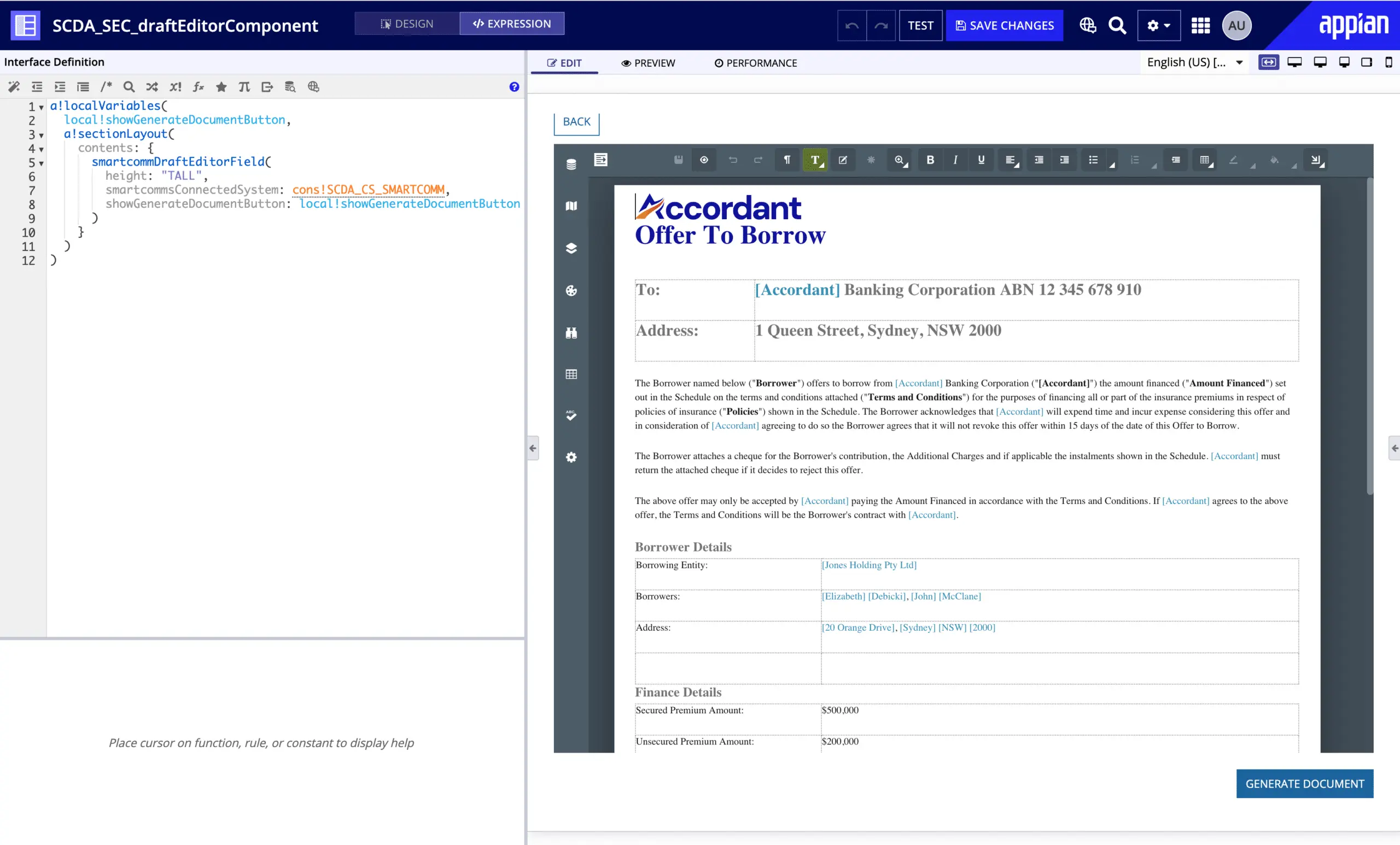
Appian is moderately priced for beginners. Its low-code platform offers an intuitive visual interface making it easy to create applications without necessarily mastering classical programming. Drag-and-drop functionality and pre-built templates help you get started quickly.
For a beginner, this means being able to design simple business applications and prototype processes without writing a lot of code. However, an understanding of the notions of BPM workflows and a certain rigor in modeling are still required to get the most out of the tool.
For a beginner, this means being able to design simple business applications and prototype processes without writing a lot of code.
How much does Appian cost?
Appian does not offer publicly posted fixed rates, its pricing is primarily based on a quotation model tailored to the specific needs of each customer. This generally depends on the number of users, the modules used and the level of support desired.
Interested companies should therefore contact Appian to define a pricing plan that matches their size and the complexity of their projects. This model allows for flexibility, but requires accurate evaluation to avoid budgetary surprises.
What are Appian's key features?
Appian's first key feature is its low-code development engine, which enables complex applications to be designed via a visual drag-and-drop interface, significantly reducing the need for manual coding. This engine also supports advanced business process modeling (BPM) integrated within the platform.
The second major feature is intelligent workflow automation. Appian integrates task orchestration, business rule management, and process steering capabilities, making it easy to create efficient, scalable solutions for managing business workflows.
The second major feature is intelligent workflow automation.
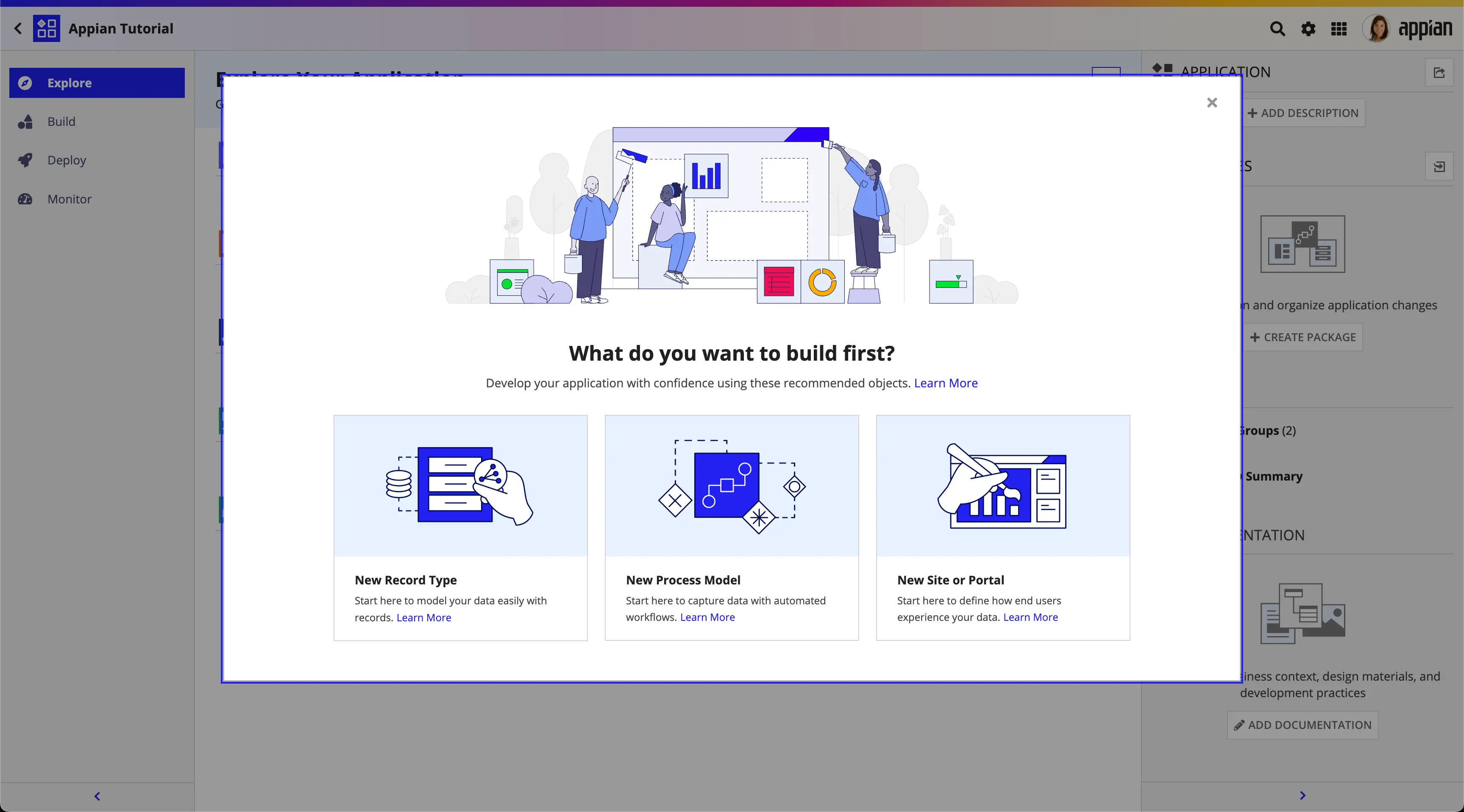
In addition to core functionality, Appian offers advanced options such as native integration with third-party systems via API, making it easy to connect your applications to other tools and databases.
Another advanced feature is support for artificial intelligence and robotic automation (RPA) to optimize repetitive tasks and deliver enhanced user experiences. These options reinforce the platform's power in digital transformation.
Appian can present certain limitations depending on the use case. For example, in projects requiring total control over the code or very specific developments, the low-code nature of the platform can restrict flexibility. Nor are purely front-end or highly graphical projects Appian's core target.
On the competitive side, solutions such as Mendix, OutSystems or Microsoft Power Apps offer interesting alternatives depending on context and technical preferences. Each tool has its strengths, often better suited to certain types of specific development.
In summary, Appian offers a robust solution for process management and low-code, with good integration but at the price of a complexity that may put off some profiles. Among its key advantages are rapid deployment and advanced automation, set against drawbacks such as cost and the need for specific expertise.
If you're looking for a low-code solution, you've come to the right place.
FAQS
Is it reliable and secure?
Appian is a reliable and secure platform, compliant with enterprise security standards. It uses robust encryption protocols to protect data in transit and at rest, and offers advanced access control and authentication mechanisms.
The platform is regularly updated to correct vulnerabilities and strengthen overall security. Its cloud and on-premise architecture also enables you to choose the environment best suited to your data protection requirements.
The platform is regularly updated to correct vulnerabilities and reinforce overall security.
Is it compatible with my other tools?
Appian supports a wide range of integrations thanks to its open APIs and predefined connectors. It supports data import/export in several standard formats, enabling good interoperability with other enterprise systems.
Is there responsive customer support?
Appian's customer support is renowned for its responsiveness and expertise. Customers benefit from dedicated support, with generally rapid response times, as well as comprehensive documentation and training to facilitate getting to grips with and advanced use of the platform.
What do other users think?
User reviews of Appian particularly emphasize the speed of low-code development and the power of integrated BPM tools. Some appreciate the flexibility and automation capability, while others mention an initial complexity in mastering the platform particularly for non-specialists.
Can I easily change later?
User reviews of Appian particularly emphasize the speed of low-code development and the power of integrated BPM tools. Some appreciate the flexibility and automation capability, while others mention an initial complexity in mastering the platform particularly for non-specialists.
Alternatives
.svg)

Specializing in business creation, sales and digital marketing, he puts his expertise at the service of users to help them identify the solutions best suited to their needs. Passionate about digital innovation and optimizing online performance, Alexis is committed to providing detailed, transparent and unbiased comparisons.
Do you have an entrepreneurial project?
We support you in the structuring and development of your tech project. Make an appointment with one of our Business Strategists.