


.avif)





.svg)



Should Adalo be used in 2025?

Adalo has established itself as a popular no-code platform for those wishing to create mobile apps without complex programming. Renowned for its intuitive interface and visual capabilities, it enables professional developers and web agencies alike to rapidly prototype and deploy high-performance, customized mobile apps.
Can we really replace traditional native development with a no-code tool like Adalo? This article offers a comprehensive overview of the platform, its strengths, limitations, and positions in the mobile solutions ecosystem. Together, we'll see if Adalo is the right choice for your projects in 2025.
My experience with Adalo
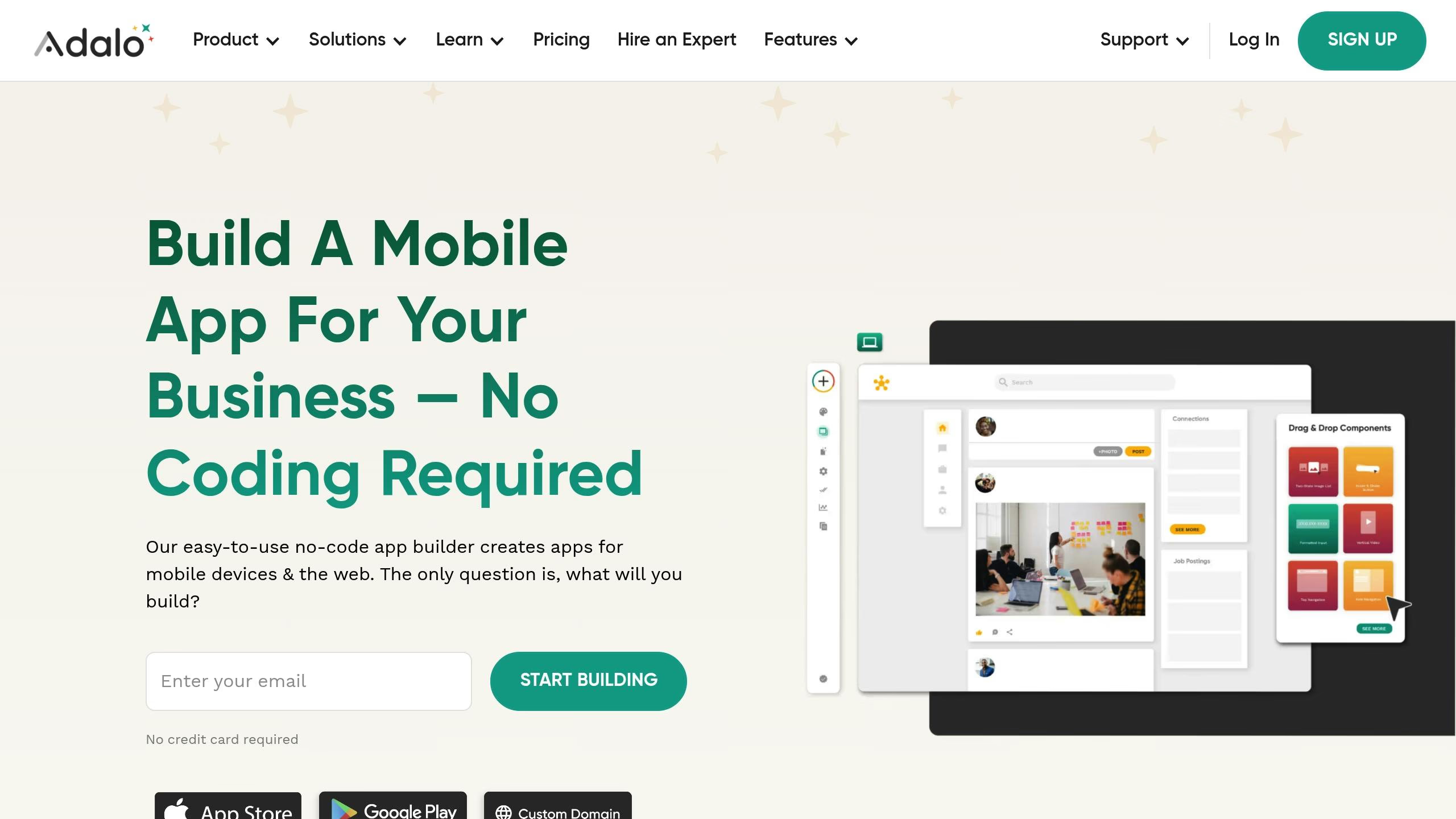
Personally, I've used Adalo mainly for rapid prototyping projects and lightweight in-house applications. What I particularly appreciated was the ease of use and speed of bringing an idea to life without having to write a line of code. What's more, the visual editor allows pleasant customization, which is a real strong point in the no-code approach.
In contexts where time is of the essence and development resources are limited, Adalo excels: it allows you to create effective MVPs and quickly test concepts with users.
However, I also found that the platform shows its limits as soon as you tackle complex functionality or advanced integrations. The options for scaling an application with specific needs remain rather restricted, which sometimes forces us to revert to traditional development.
Is Adalo really useful for my needs?
The real question to ask yourself before adopting Adalo is: what is the objective of your mobile application? If you need a quick solution to launch an MVP or a prototype, Adalo proves to be a valuable ally.
This tool is perfect for several profiles:
- Startups looking to validate an idea without heavy investment in development
- Web agencies wishing to offer functional demos quickly
- Non-specialized mobile developers wishing to produce simple applications
In addition, Adalo stands out for a good library of components and integrations that facilitate code-free implementation. This is another major advantage for users looking for efficiency.

Is Adalo suitable for beginners?
Adalo is particularly well-suited to beginners who want to start creating mobile applications without in-depth technical skills. Its drag-and-drop interface and numerous templates make it easy to get to grips with.
Furthermore, features such as integrated database management and pre-configured actions enable novices to produce a result quickly without getting lost in the technicalities, which is a considerable advantage for those new to app development.
How much does Adalo cost?
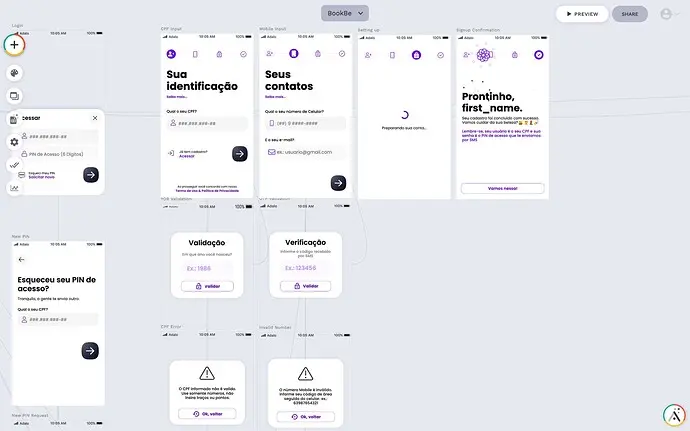
Adalo offers an attractive free plan that lets you create and test applications with a limited number of users and basic functionality, ideal for prototypes or personal projects.
The Pro plan costs around €50/month and gives access to more features, including connection to external databases, publication on mobile stores and removal of the free version's limitations. It's a relevant choice for small businesses and developers wishing to deploy functional applications without compromise.
Customized offers are also available for companies with specific needs, but most users will find these two packages an interesting balance between cost and features.
What are Adalo's key features?
Adalo's first key feature is its highly intuitive visual drag-and-drop editor. It lets you build mobile interfaces without writing code, easily assembling components such as lists, forms or buttons.
Another important feature lies in native database integration. Adalo offers an environment for managing your application data simply, with the ability to create complex relationships between objects and manage user actions, which is essential for dynamic applications.

Advanced features include the ability to add custom actions (business logic) without programming. This allows you to define specific behaviors for your app based on user interactions.
Adalo also offers integrations with external services via APIs, expanding the possibilities beyond native components to include features such as payments, geolocation or push notifications.
Adalo's limitations appear above all for applications with high functional complexity: advanced data management, complex business logic, or extensive customizations remain difficult to master.
In the face of competitors such as Bubble or Glide, which sometimes offer greater flexibility and advanced functionality, Adalo may appear limited on certain technical aspects, while remaining an excellent option for simplicity.
In short, Adalo prioritizes ease of use over raw power. For quick and simple use, it shines, but for ambitious projects with specialized requirements, another tool or classic development may be preferable.
FAQS
Is it reliable and secure?
Adalo is a reliable platform with standard security protocols for mobile applications. Data is hosted on secure servers and the platform uses encrypted communications to exchange information.
However, as with any no-code tool, ultimate security will also depend on how you configure access and manage data in your application. It's essential to set up user permissions properly and follow good data protection practices.
Is it compatible with my other tools?
Adalo supports direct publishing to iOS and Android stores, making it easy to get your created apps online. It also enables integrations via API and supports data import/export in various formats.
It is compatible with numerous third-party services such as Zapier, Airtable or Stripe, increasing the functional reach of your applications.
Is there responsive customer support?
Adalo's customer support is responsive, with a dedicated team usually responding within 24 hours. The site also offers comprehensive documentation, video tutorials and an active community to help users.
This support is suited to developers and agencies looking for accessible support while maintaining a good level of professionalism.
What do other users think?
User reviews often emphasize the ease of use and speed of creation, highlighting the visual editor appreciated for its simplicity. On the other hand, some regret limitations on advanced customization and scalability.
Overall, Adalo receives a positive reception from beginners as well as professionals looking for an effective but simple no-code tool.
Can I easily change later?
User reviews often emphasize the ease of use and speed of creation, highlighting the visual editor appreciated for its simplicity. On the other hand, some regret limitations on advanced customization and scalability.
Overall, Adalo receives a positive reception from beginners as well as professionals looking for an effective but simple no-code tool.
Alternatives
.svg)

Specializing in business creation, sales and digital marketing, he puts his expertise at the service of users to help them identify the solutions best suited to their needs. Passionate about digital innovation and optimizing online performance, Alexis is committed to providing detailed, transparent and unbiased comparisons.
Do you have an entrepreneurial project?
We support you in the structuring and development of your tech project. Make an appointment with one of our Business Strategists.