.avif)





.svg)
.svg)



Table of Contents



Published on
5/3/26
-
5 min

More and more companies are noticing a puzzling phenomenon: their website ranks well on Google and generates organic traffic, but remains completely invisible in the responses produced by artificial intelligence. When a user queries ChatGPT, Gemini, or Perplexity, their expertise is never cited, creating a new form of digital shadow.
This situation is neither a bug nor inevitable, but the result of a paradigm shift detailed in our GEO pillar article: the new SEO in the era of AI search engines. Here, we will analyze the concrete causes of this absence and understand why certain content, even when optimized for traditional SEO, is systematically ignored by language models (LLMs).
Before getting into the technical obstacles, it is crucial to understand that AI engines do not seek to index pages, but to synthesize reliable answers. As an agency specializing in GEO, Easyweb supports companies in removing these invisible barriers and adapting their editorial assets to the real criteria of generative engines.
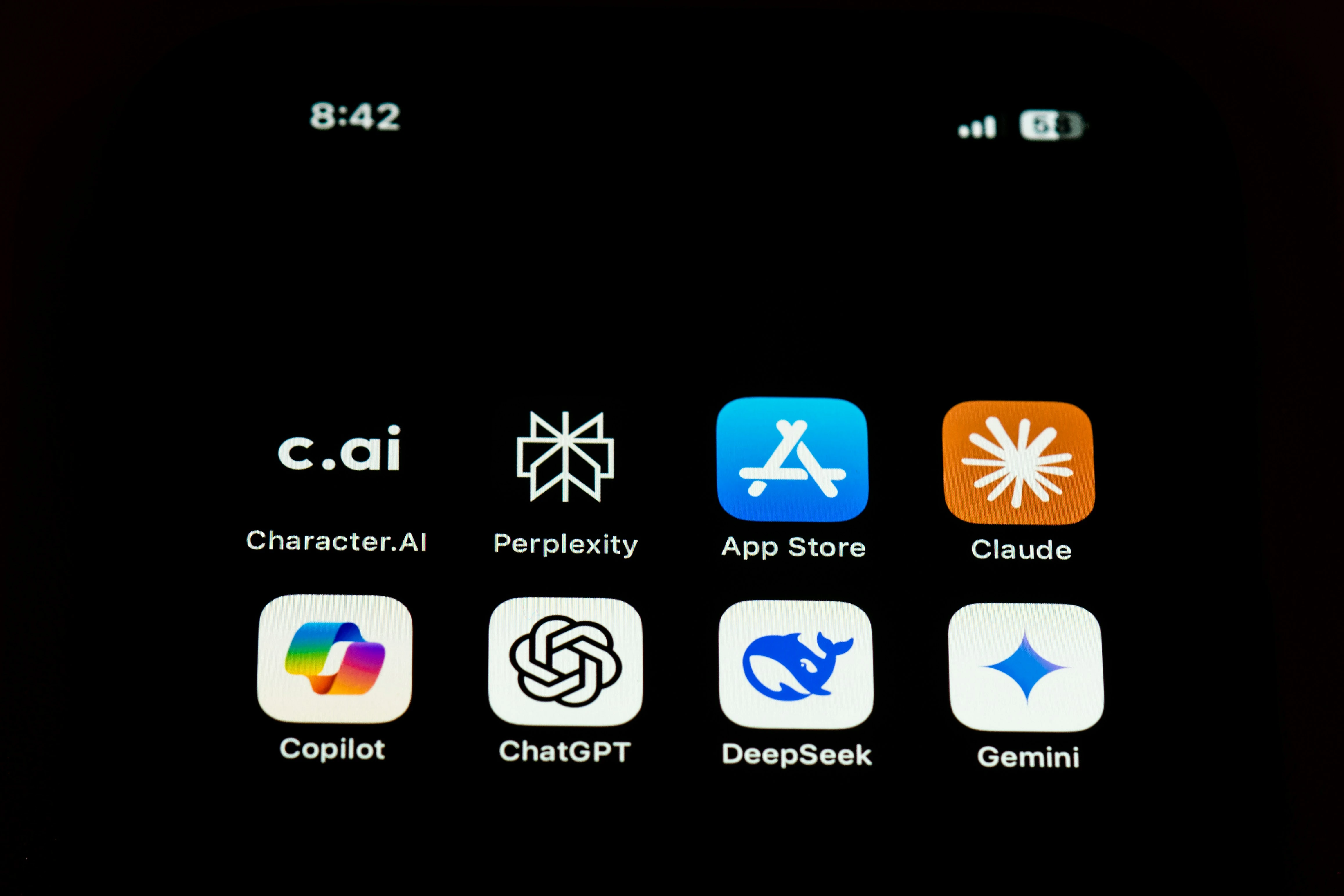
The fundamental mistake is to believe that a good Google ranking guarantees a citation by AI. Unlike traditional SEO, which offers a list of links, engines such as Perplexity and SearchGPT analyze bodies of text to extract passages capable of constructing an autonomous response.
In this new context, visibility depends on a content's ability to be directly exploited by a language model. A site may be technically perfect for Google but completely silent for Gemini if it does not provide clear and structured answers.
The first obstacle concerns search intent. Many web pages are still designed to capture a volume of keywords rather than to answer an explicit question. However, AI favors content that solves a problem or answers a specific question.
Content that is too general and diluted with excessive marketing jargon prevents the model from understanding the essential information to be extracted. For AI, each page must be able to be cited in isolation. If the question being addressed is not identifiable from the first few lines (inverted pyramid principle), the content is discarded. This is where AEO (Answer Engine Optimization) and LMO (Language Model Optimization) become central, putting intent back at the heart of writing.

Even with relevant content, an unsuitable form can paralyze your GEO visibility. LLMs divide texts into logical blocks. A confusing structure or overly dense paragraphs complicate this segmentation.
A major academic study conducted by Aggarwal et al. on Generative Engine Optimization shows that well-structured content is up to 40% more likely to be cited in AI-generated responses.
To be "AI-ready," a text must have clear sections with explicit titles and self-contained paragraphs. Each sub-section should answer a specific sub-question, making it easier for the algorithm to understand the whole. Conversely, a text without hierarchy forces the model to interpret the reasoning, increasing the risk of error (hallucination); the AI will then prefer to turn to a more readable source.
Credibility is the central pillar of selection. To limit the risk of misinformation, AI engines favor content with indisputable reliability signals. These signals go far beyond simple backlinks.
Analyses published by OpenAI show that the reliability of sources directly influences the quality of the responses generated. To increase your E-E-A-T (Experience, Expertise, Authority, Trust) score, your content must include:
Affirmative but unsourced content is perceived as a risk by AI and will be systematically ignored in favor of a source capable of justifying its claims.
Editorial tone is an often underestimated factor. AI engines act as educational assistants: they favor neutrality and objectivity. Texts saturated with superlatives ("the best," "revolutionary") or exclusively sales-oriented are perceived as biased.
This does not mean that you have to abandon your commercial strategy, but it must be peripheral to the informative content. Content that explains, defines, and contextualizes is much more likely to be picked up. This logic of "neutral language" is at the heart of LMO, which aims to align your editorial style with the way machines interpret truth.
Correcting these obstacles begins with a semantic and structural diagnosis of your existing content. The goal is not to produce a mass of new texts, but to enrich what already exists to make it "synthesizable."
This transformation methodology is detailed in our guide: How to optimize your content to be cited by AI (GEO in practice). This document offers a concrete approach to rephrasing your paragraphs, integrating evidence of credibility, and structuring your pages so that they become ready-to-use answers.
To help you, you can also apply the tips highlighted in the following video:
If your site is absent from AI responses, it is not a coincidence, but the result of content designed for a search model at the end of its cycle. GEO provides the necessary framework to regain control over your future visibility.
To learn more about this topic and take action, we recommend that you consult: