


Webflow: Create an effective SaaS website

Published on

11/28/25

-

5 min

Webflow website SaaS

Contents

Summarizing this article with an AI


Software as a service (SaaS) refers to business models that are hosted on a remote server and accessible via a web browser. They are becoming increasingly popular because they offer many advantages to businesses, including reduced costs, greater flexibility, and improved scalability.

A SaaS site is a website that offers software as a service. It is therefore a website that offers a software solution via a web browser on a home page. To put your SaaS site online, you'll also need to think about optimizing it to attract and convert visitors. With Webflow, the essential tool for creating a professional website without writing a single line of code, you can design your projects without being a web design expert. In this article, we'll look at how to create an effective SaaS site with Webflow.

The benefits of Webflow for SaaS websites

Webflow offers several advantages for SaaS websites, which we present in the table below:
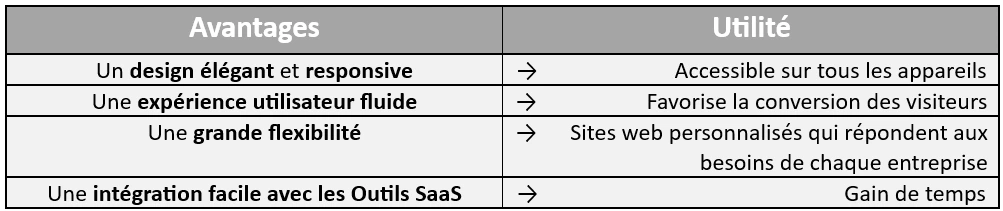
Webflow offers a multitude of advantages for SaaS websites, including elegant and responsive design, a smooth user experience, great flexibility, and easy integration with SaaS tools. We will now look at the best way to create an effective SaaS website with Webflow.

How to create a SaaS website with Webflow (the practical guide)

Here are the steps to follow to create a SaaS website with Webflow:

Select a template

Webflow offers a wide range of pre-designed templates that can be used as a starting point for creating your SaaS website.

Choosing your template in Webflow is an important step in creating your website because it will determine the design, structure, and functionality of your site.

A few things to consider when choosing a template in Webflow:

  • The type of website you want to create: Webflow offers a wide range of templates, each suited to a specific type of website. If you want to create a website for a business, you will need a different template than you would for a blog or online store. Find out how to choose the right template in Our Ultimate Guide to Webflow Templates.
  • Your graphic charter: If you have a graphic charter, make sure you choose a template that complies with it. This will enable you to create a website that is consistent with your brand image.
  • Your specific needs: Think about the specific features you need for your website. If, for example, you want to sell products online, you will need a template with a shopping cart.

Here are our last three tips to help you choose your template:
  • Do your research: Take the time to research and compare different options. Visit Webflow's template library and browse the different templates available.
  • Read reviews: Check out user reviews for each template before making your decision. This will help you make an informed choice.
  • Try before you buy: Webflow offers a free trial version of all its templates. This allows you to test the template before purchasing it.
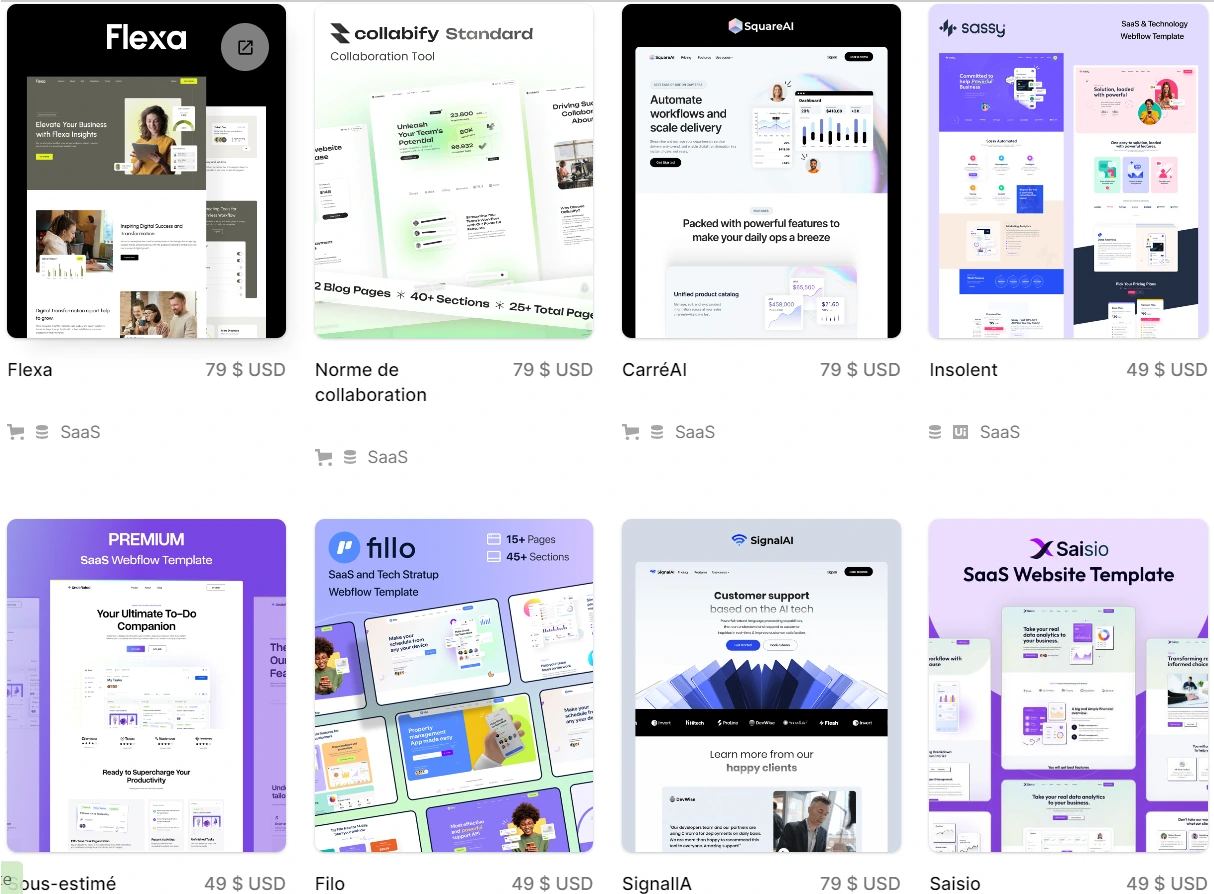
Webflow Templates
Above are a few examples of templates you will find in Webflow.

Customize your website

Once you have chosen a template, you can customize it to suit your needs. You can modify the template's design, content, and features.

Here are some elements you can customize in a Webflow template:

  • Color: Change the color of template elements such as titles, paragraphs, and buttons.
  • Font: Change the font of the template elements.
  • Images: add or remove images from the template
  • Content: customize the template content based on what you want to highlight.
  • Features: add or remove features from the template.

Integrate your SaaS tools

If you use SaaS tools, you can integrate them into your Webflow website. This will allow users to enjoy a consistent user experience (UX).

In this case, Webflow offers easy integration with SaaS tools. You can integrate them in several ways:

  • Via widgets: Webflow offers a library of pre-designed widgets that allow you to integrate SaaS tools into your website. These widgets are easy to add and configure.
  • Via custom code: If you have specific requirements, you can integrate SaaS tools into your website via custom code. This will allow you to create an integration that meets your exact needs and those of your customers.

Here are some examples of common SaaS integrations with Webflow:

  • CRM integration: You can integrate a CRM with your Webflow website to track leads and customers.
  • Marketing automation integration: You can integrate a marketing automation tool with your Webflow website to automate your marketing campaigns.
  • Payment integration: You can integrate a payment tool into your Webflow website to allow users to pay for your products or services.

You can also learn more about the different integrations compatible with Webflow in the article opposite: Our Webflow Integrations.

To integrate a SaaS tool into your Webflow website, you must follow these steps:

  1. Choose the SaaS tool you want to integrate: Look for a SaaS tool that meets your needs and is compatible with Webflow.
  2. Obtain integration information: The SaaS tool you choose will provide you with the integration information you need. This information may include API keys, URLs, or codes.
  3. Add the widget or custom code: If the SaaS tool you choose offers a widget, you can simply add it to your Webflow website. If you need to use custom code, you will need to add it to your Webflow website via the code editor.
  4. Configure the integration: Once you have added the widget or custom code, you will need to configure the integration. This may involve entering integration information and customizing its appearance.

Finally, don't forget to read the SaaS tool documentation (detailed instructions on how to integrate the tool into your Webflow website) and test the integration to make sure it works properly.

By following these tips, you can integrate SaaS tools into your Webflow website to create a consistent and effective user experience.

Optimize your website for search engine optimization

It is important to optimize your website for natural referencing so that it ranks well in search results.

Search engine optimization (SEO) is the process of improving your website with the goal of making it more visible in search engine results pages (SERPs). There are many SEO techniques you can use to improve your ranking, but some of the most important ones are as follows:

  • Choosing the right keywords
  • Create quality content
  • Build inbound links
  • Optimize your site for mobile devices
  • Update your website regularly

You will also find details on how to optimize your Webflow website for SEO in our article on creating an e-commerce website.

Conclusion

Webflow is a powerful and flexible website creation platform that offers many advantages for SaaS sites. By following the steps outlined above, you can create an effective SaaS site that will attract and convert your visitors. Please note that the digital agency EasyWeb can assist you in creating your SaaS website in Webflow. Our teams of experts will be happy to provide you with a 100% free audit of your web project.


Alexis Chretinat - Business Strategist
I'm Alexis and together we'll take stock of where you are and what's possible from a technical, financial and commercial point of view =)

So,
shall we begin?