.avif)




.svg)



Table of Contents


Published on
5/3/26
-
5 min
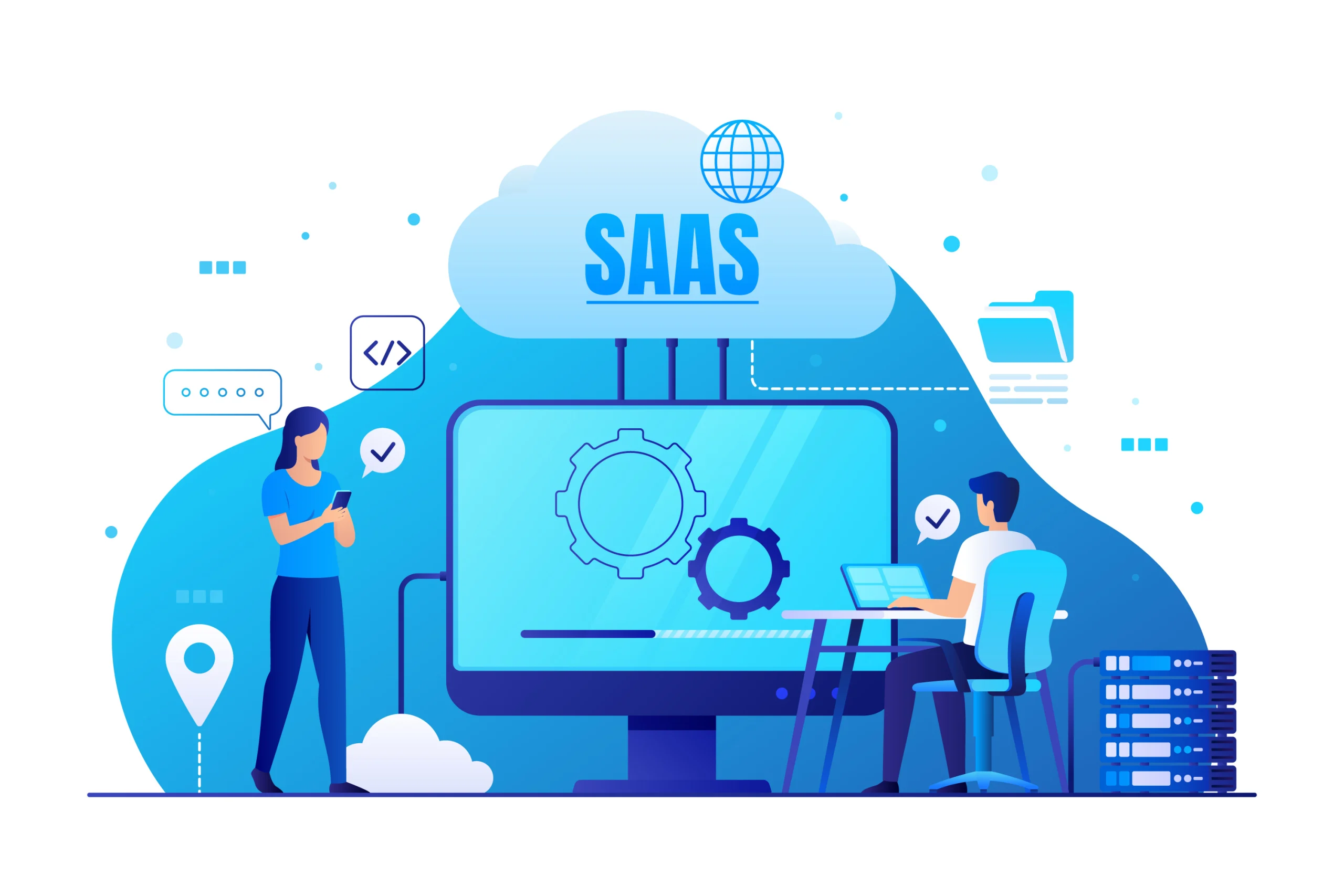
Custom SaaS development is now establishing itself as a serious alternative to standard software. Whereas generic solutions attempt to meet as many needs as possible with a common foundation, custom solutions are based on your actual business reality. This approach allows you to design a tool that is perfectly aligned with your internal processes, production constraints, strategic objectives, and even your team's vocabulary. Far from being a luxury reserved for large companies, it is now a solution accessible to any organization seeking to gain efficiency, fluidity, and consistency. Software then becomes a business accelerator, rather than an obstacle to be circumvented.
Choosing customized SaaS development also means regaining control over your tool. You define the essential features, you decide on the level of security, and you anticipate future developments without depending on an external publisher. This means fewer technical compromises, fewer forced adaptations, and above all, better adoption by your teams. Every element of the platform is designed to fit the way you work. In a context where digital tools are multiplying and differentiation also depends on the quality of the user experience, this customized approach becomes a real lever for sustainable performance.
Many companies struggle with the constraints of off-the-shelf software. It is too rigid, too generic, and poorly integrated with their business reality. In this context, customized SaaS development makes perfect sense.
Designing a tool that is 100% aligned with your internal processes allows you to gain in efficiency, operational consistency, and strategic agility. Customization is a pragmatic approach: starting from your actual uses to create a solution that is useful from day one.

Custom SaaS is an online application developed specifically for a company. It is designed to meet specific needs within a functional framework defined with the project team. Unlike general-purpose SaaS solutions, it does not seek to adapt to everyone.
This approach allows us to design software that speaks your business language, respects your internal logic, and integrates naturally into your existing digital ecosystem.
Custom development allows you to eliminate unnecessary features and focus your efforts on what generates value. It is an approach centered on results, not on the product.
This promotes adoption by teams, fluid user journeys, and consistency in technical decisions. The code becomes a tool that serves your strategy, not a hindrance.
Customization is not reserved for large corporations or unlimited budgets. It is a very accessible lever, provided it is well defined from the outset.
Here are the main benefits observed in well-managed projects.
Rather than forcing your teams to adapt to a tool, the tool adapts to your way of working. The result: less resistance to change, less training required, and more natural use from the outset.
Internal workflows, user roles, validations, data formats: everything can be designed according to your standards.
Needs evolve. A good customized SaaS solution is built to support these changes without having to rebuild everything. Adding features, integrating new services, adapting to usage volume: every step is anticipated.
This ability to continuously evolve saves you from sudden overhauls or costly technical dead ends.
When you develop custom SaaS, you own the code, the architecture, and the finished product. You are no longer dependent on a third-party publisher or supplier.
This gives you more freedom in your decisions, greater security regarding the software's longevity, and better control over future costs.
Creating a customized SaaS application is not just about "having your own tool." It is a way to streamline exchanges, save time, and strengthen your company's image.
Here are some typical use cases.
A CRM with follow-up logic specific to your sales cycle. An ERP adapted to your logistics flows. A customer tracking platform integrated with your contracts and legal documents. The possibilities are endless.
The more the software matches your actual uses, the more natural it becomes to use. And the more productive your teams become.
Customized SaaS offers a more fluid, clearer, and more intuitive interface. You can integrate animations, customization logic, and dashboards designed for action.
For your customers, employees, or partners, this is a real plus in terms of brand image and ease of use.
You might think that customization means "starting from scratch." That's not the case. A well-designed SaaS project is based on a solid technical foundation and relies as much as possible on existing reliable building blocks.
Authentication systems, payment solutions, transactional email tools: all of these can be intelligently integrated into a custom development.
The goal is not to reinvent the wheel, but to assemble the right components to create a unique, stable, and high-performance tool.
The success of a custom SaaS solution depends on a strong partnership: you, with your business vision, and a development partner capable of transforming that vision into a product.
It's not just about "writing code," but having a team capable of supporting you in scoping, technical choices, monitoring, and scalability.
Custom SaaS development is a strategic lever for all companies that want to regain control of their digital tools. It allows you to align features, user experience, and performance with the real needs of your organization.
Other articles that may interest you:
At Easyweb, we support SMEs, start-ups, and groups in the design of their SaaS applications, from the ideation phase to deployment.