.avif)





.svg)



Table of Contents



Published on
5/3/26
-
5 min

Mobile apps have become a central element in the digital transformation of businesses. While websites remain an essential foundation, mobile apps are now key to enhancing the user experience, building customer loyalty, and creating new revenue streams.
In 2025, the stakes are more strategic than ever: mobile usage far exceeds that of computers, consumers prefer fast and personalized interactions, and companies that invest in this channel gain a sustainable competitive advantage.
Before going any further, discover our mobile app agency service, where we detail how we support brands in the design, development, and deployment of their apps.
Statista has conducted a study showing that there are now more mobile phones in the world than humans.
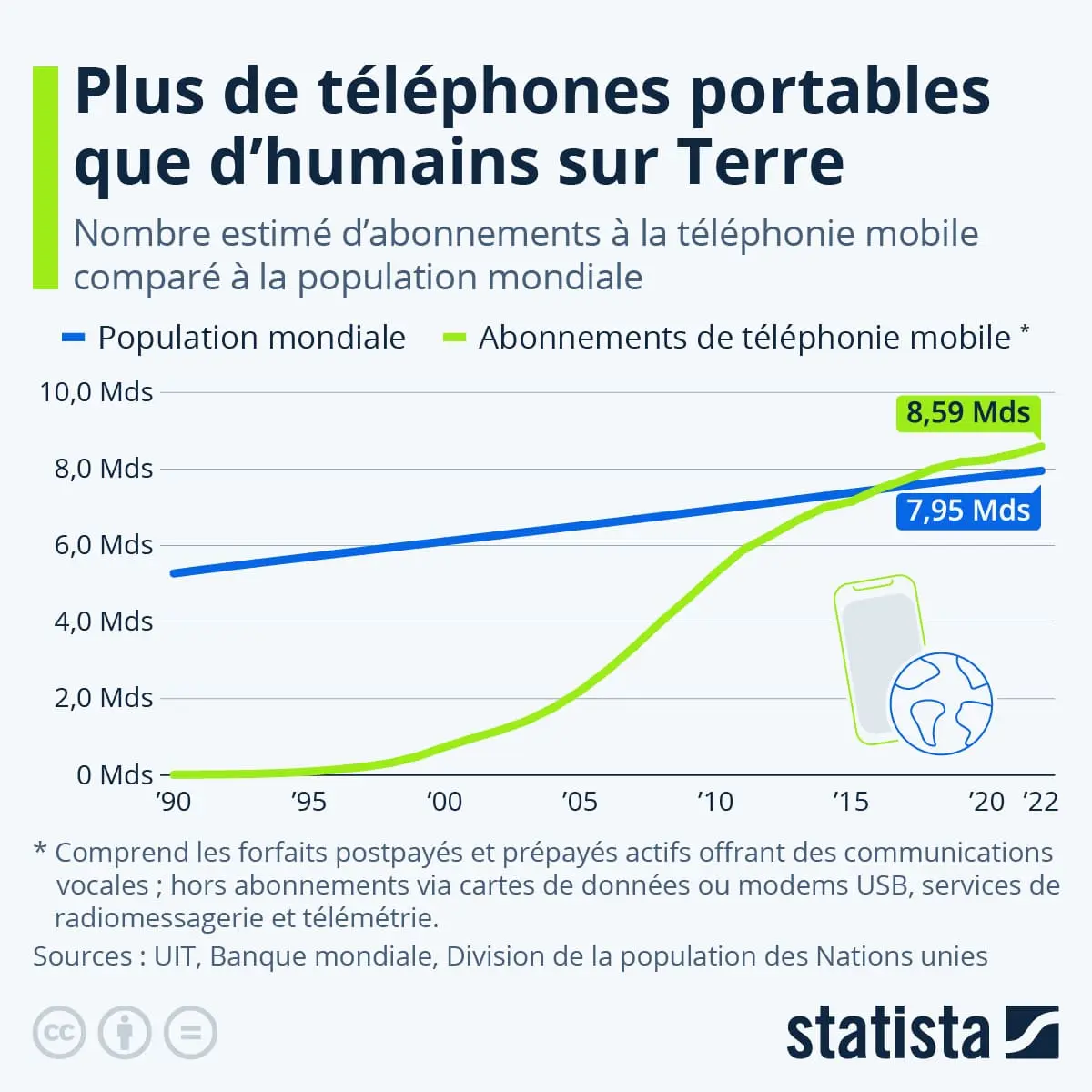
For several years now, Google and other search engines have been favoring mobile-optimized websites and apps. By 2025, this trend will become the norm. Companies are no longer content to simply adapt their websites to smartphone screens: they are completely rethinking their customer journeys, starting with mobile. Mobile apps are thus becoming the centerpiece of the digital experience, capable of meeting users' expectations for immediacy, fluidity, and personalization.
This mobile-first approach is driving brands to invest more in UX design, technical performance, and app-exclusive features such as push notifications, offline access, and geolocation. More than just an additional channel, the mobile app is now the main showcase for customer relations.
Mobile app development has long been the preserve of large companies with substantial budgets. But the arrival of no-code and low-code solutions has changed the game. Tools such as FlutterFlow, Adalo, and Bubble now make it possible to create functional, high-performance apps in just a few weeks.
These platforms offer SMEs and startups the opportunity to quickly launch a minimum viable product (MVP) that already includes essential features such as forms, CRM management, online payment, and marketing automation. As a result, development costs are falling dramatically, time to market is accelerating, and innovation is becoming accessible to all.
By 2025, artificial intelligence will no longer be a simple technological asset, but a central element in the design of mobile applications. Users expect personalized, fluid, and relevant experiences. AI meets these expectations in several ways: product recommendations based on behavior, predictive analytics to anticipate needs, chatbots capable of providing 24/7 customer support, and real-time machine translation.
The integration of AI transforms each application into a true intelligent assistant, capable of supporting the user throughout their purchasing or usage journey. In terms of marketing, this translates into an improvement in the conversion funnel, a reduction in the bounce rate, and an increase in the average basket size in e-commerce.
To better understand the good reasons for creating a mobile app, we invite you to watch this video.
Launching a mobile app in 2025 addresses several major challenges. First, it increases visibility and provides access to a continuously growing market. Second, it transforms customer relationships by offering more personalized interactions, simplified journeys, and increased retention.
A well-designed mobile app also becomes a differentiator from the competition. In saturated sectors, it gives you a head start by offering a richer experience than a simple responsive website. Finally, it opens the door to new sources of revenue, whether through integrated e-commerce, subscriptions, or premium services.
In reality, all sectors can benefit from a mobile app, but some gain an immediate competitive advantage:
Each example demonstrates that mobile apps are not just digital storefronts: they are becoming operational tools for converting customers, building loyalty, and improving overall business performance.
Creating a mobile app cannot be improvised. In 2025, the challenges to anticipate concern several aspects:
Mobile apps are now an integral part of overall marketing strategy. They are not just a technical tool, but a powerful channel for communication and conversion.
Combined with inbound marketing, they can generate and qualify leads through integrated forms, email campaigns, or optimized conversion funnels. With Google Analytics and connected CRMs, every interaction is measured, analyzed, and leveraged to improve performance.
In addition to AdWords and social media campaigns, a mobile app acts as a permanent landing page, always available for conversion.
In 2025, companies no longer have the luxury of hesitating. Mobile apps have become a natural extension of your digital strategy, as important as a website or SEO campaign.
Brands that make this shift will become leaders in their market. Those that delay risk seeing their prospects turn to more modern and attractive competing solutions.
To learn more about this topic: