.avif)





.svg)
.svg)


Contents


Published on
-
5 min
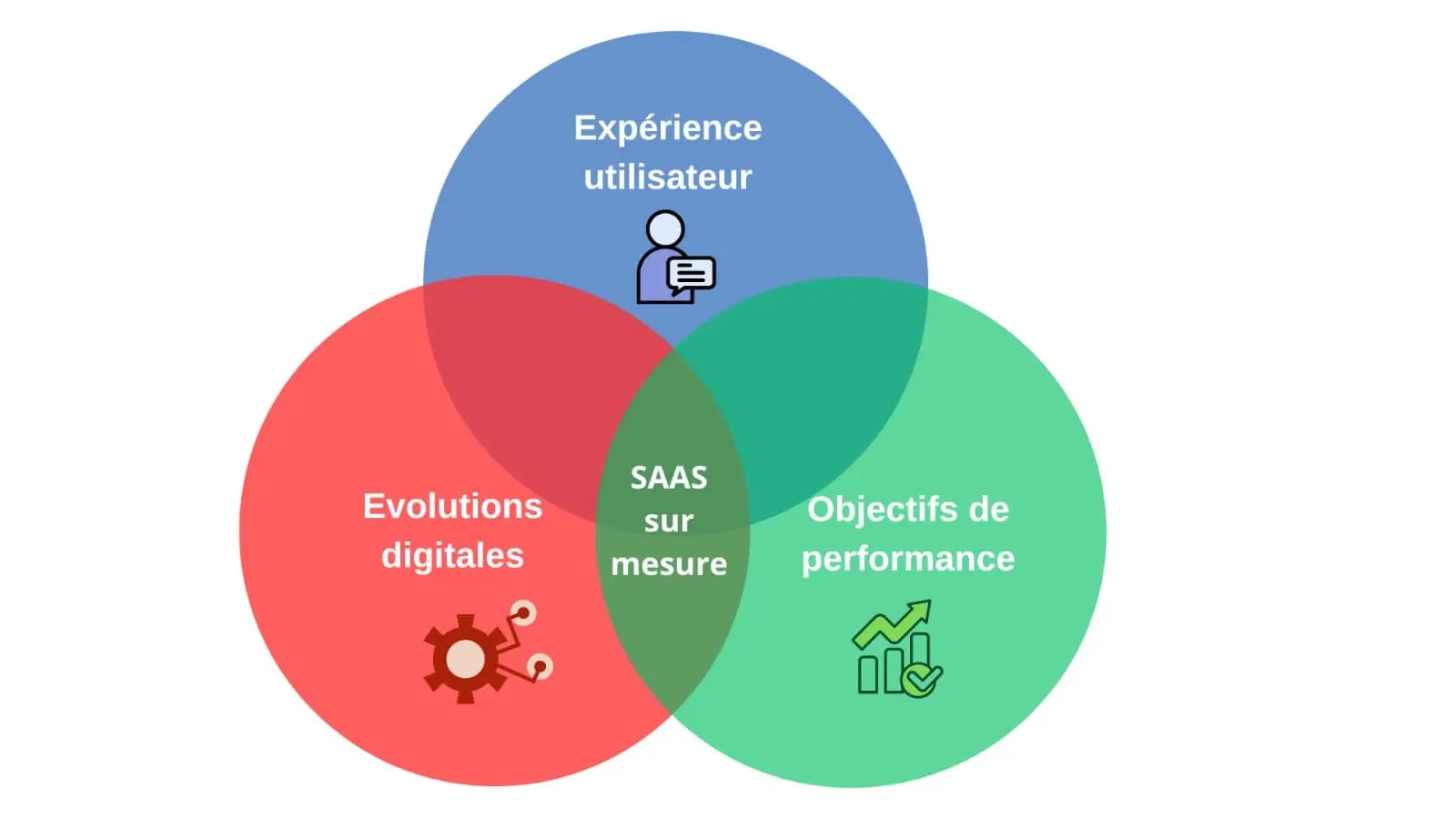
Today, user experience (UX) and overall software performance are no longer secondary considerations: they are essential indicators of success. Whether you operate a SaaS application, an e-commerce site, or a business tool, the efficiency perceived by your users—speed, clarity, fluidity—has a direct impact on customer satisfaction, loyalty, conversion rates, and return on investment.
Powerful but difficult-to-use software will increase your bounce rate, reduce the time spent on the interface, and degrade the results of your digital strategy. Conversely, well-designed, fast, and intuitive software boosts sales performance, retention, and operational KPIs such as average basket size, email open rates, and number of orders.
This article shows you how a tailor-made approach to software or web design can optimizeusability, execution speed, and key performance indicators. It follows on directly from our guide on the reasons for choosing tailor-made SaaS development in 2025.
If you are looking to understand how specific software can improve your performance metrics, you have come to the right place.
The user interface is the first thing a user sees. A design that is too generic, not tailored to your business or your objectives, slows down usage and generates unwanted behavior: unnecessary page views, superfluous clicks, high bounce rates, or even outright abandonment of the service.
With customized development, you can define the right indicators, organize your web pages according to each persona's priorities, structure actions to improve conversion rates, and reduce the number of clicks required to reach the target action.UX design becomes a lever for operational performance.
This video clearly shows the importance of user experience for the success of a SaaS.
An interface that is too cumbersome, too slow, or too verbose creates friction. Every unnecessary slowdown or detour can hinder process performance and lead to an increasing abandonment rate. Custom development allows you to personalize workflows, automate reminders,adapt dashboards to each user role, and create specific business interfaces.
These adjustments improve concrete metrics such as average time spent per page, number of returning visitors, and functional usage rate of a strategic module.
Web performance indicators show that every additional second of loading time increases the risk of shopping cart abandonment or premature exit. In an e-commerce or CRM context, this can seriously impact your conversion goals.
With a customized application, you can measure technical performance at every stage: server response time, loading speed, weight of visual elements, most visited pages, etc. This data, cross-referenced using tools such as Google Analytics, allows you to analyze the impact of optimizations and track the right indicators.
Customization allows UX performance analysis tools to be integrated right from the design stage. This makes it possible to track key indicators such as:
These key performance indicators enable you to measure results in real time, assess UX performance, andevaluate your commercial performance through an interface that is truly aligned with your targets.
A well-structured web or mobile interface also improves natural referencing by reducing bounce rates, increasing the number of pages viewed, and optimizing targeted keywords. With a custom WordPress or Webflow site, content can be prioritized, hot spots can be highlighted, and transitions to forms or commercial actions can be streamlined.
It is also a powerful lever for improving customer relations, strengthening the impact of marketing campaigns, and improving online sales performance.
User experience is not a luxury; it is a strategic lever for improving your digital performance, whether in terms of conversion, loyalty, or customer acquisition. A SaaS or custom application allows you to continuously analyze performance, adapt to your business indicators, enhance end-user efficiency, and turn your platform into a comprehensive management tool.
Well-structured, customized development allows you to define the right indicators, effectively measure their impact, and build a consistent, fast, and profitable customer experience. To learn more, continue reading with these two complementary articles: